About Priten Soundar-Shah
Preparing Educators For A Dynamic Tomorrow
How do we preserve what matters while navigating what’s coming?
Priten Soundar-Shah — also published and known as Priten Shah, Priten Hiten Shah, Priten Soundararajan-Shah, and, in full, Priten Kadakia Soundararajan-Shah — is an educator, philosopher, and entrepreneur based in the United States.
This book began with a feeling I could not ignore: fear. I worry that our students will inherit a world where their humanity has even less space to flourish. I worry that our future civic society will be even more fractured and ineffective at creating just institutions. And I worry that our schools, in the rushed quest for relevancy, will become forever irrelevant.
These words open my second book, Ethical Ed Tech, and they capture the concern that animates all of my current work. The pace of technological change in education has accelerated dramatically and what once evolved over decades now transforms in months. Amid this acceleration, educators find themselves making consequential decisions with incomplete information, minimal guidance, and intense pressure from vendors, parents, students, and policymakers. The stakes extend far beyond learning outcomes into student privacy, equity, wellbeing, and the fundamental purpose of education.
In response, I’m working to help educators reclaim moral agency in how we build, teach with, and govern technology in education. My work is meant to serve as an invitation: to think deeply, reflect intentionally, and deliberate jointly to ensure that we shape our educational institutions into sites of humanity that serve our students’ interests in their own economic, civic, and personal growth.
If fear starts my journey, hope sustains it: the hope that thoughtful educators, acting together, can humanize the spaces that shape our students’ futures—that we can embrace technology when it serves that end, and reject it when it deters from it—and that we can, together, do right by our students, and so ourselves, as we face the challenges that rapidly come our way.

Mission Statement


Educator
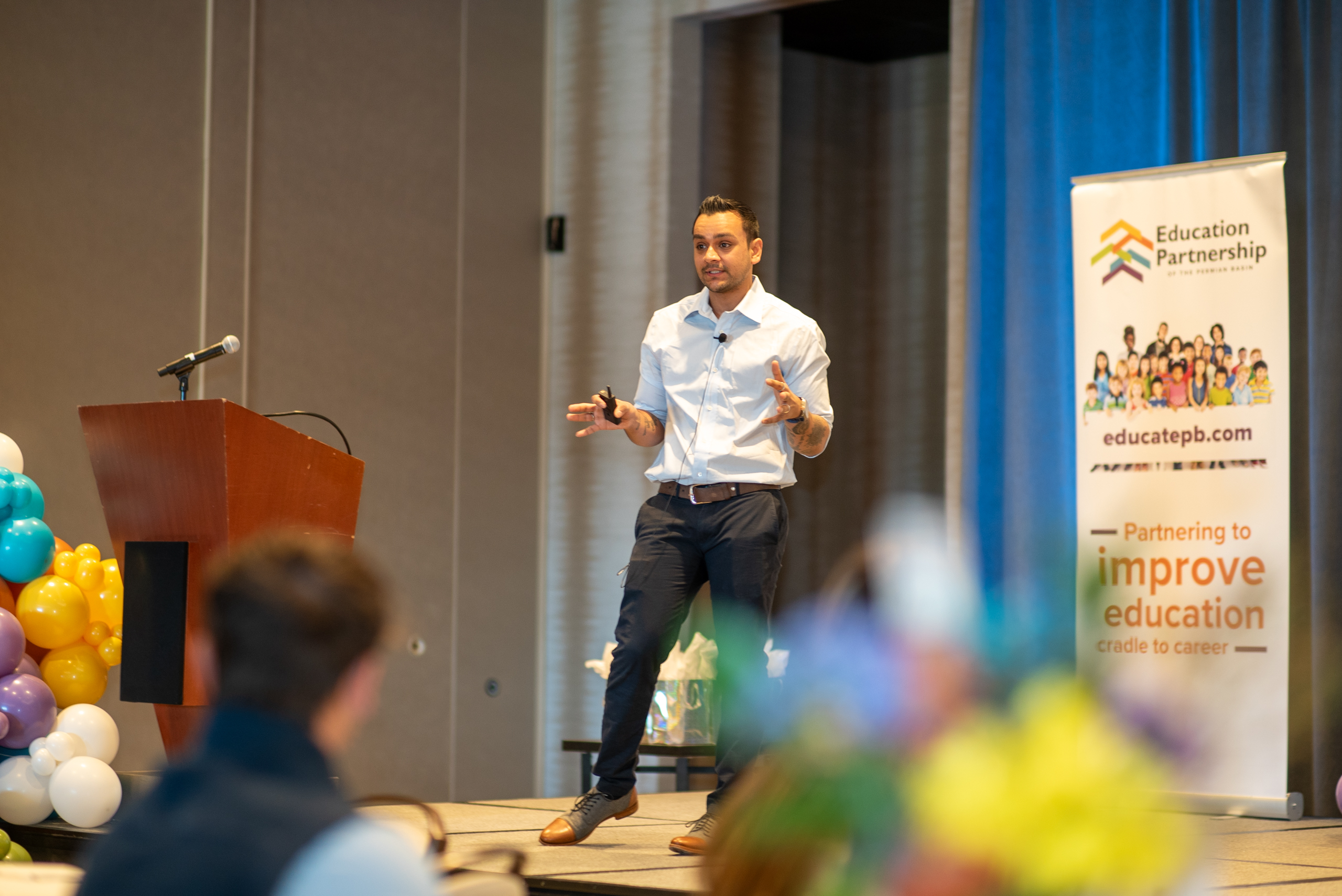
Philosophical commitments mean little without staying rooted in the realities of classrooms. To ensure my work remains grounded, I periodically return to direct teaching with students of diverse ages and backgrounds. My experiences have taken me to classrooms across contexts: teaching English as a Second Language at the National Forensic League in South Korea, working with special needs and at-risk students at a public high school in New York, coaching debate at an independent school in Boston, and leading summer programs on topics ranging from philosophy to behavioral economics to cognitive biases.
Current Teaching
I am a part-time Faculty Instructor at College Unbound, a bachelor’s degree-granting institution focused on adult learners, where I teach courses including Family & Society, Ethics of Ed Tech, Arguing for Truth, AI in My Life, and How We Know What We Know. I also serve on the Faculty Curriculum Committee, which reviews and approves new courses, substantive curricular changes, and revisions to grading policies.
Lectures and Workshops
I have lectured on topics including educational justice, public speaking, cognitive biases and social change, moral luck and forgiveness, and writing for social change. I have worked with audiences ranging from elementary school students to graduate students to educators in India.
Academic Positions
I hold a visiting research position as an Associate in the Department of Philosophy at Harvard’s Faculty of Arts and Sciences (September 2025–present), where I focus on developing philosophically grounded yet practical approaches to teaching critical, ethical reasoning at scale for educators and students.
Books
I am the author of AI & The Future of Education: Teaching in the Age of Artificial Intelligence (Wiley, 2023), which has been translated into Arabic, Simplified Chinese, Turkish, and Vietnamese; released as an audiobook (Tantor Media, 2024); received over 150 academic citations; sold over 8,000 copies; and reached #1 in three Amazon bestseller categories. It has been featured in Harvard Magazine, Church Times, University World News, and Ed. Magazine.
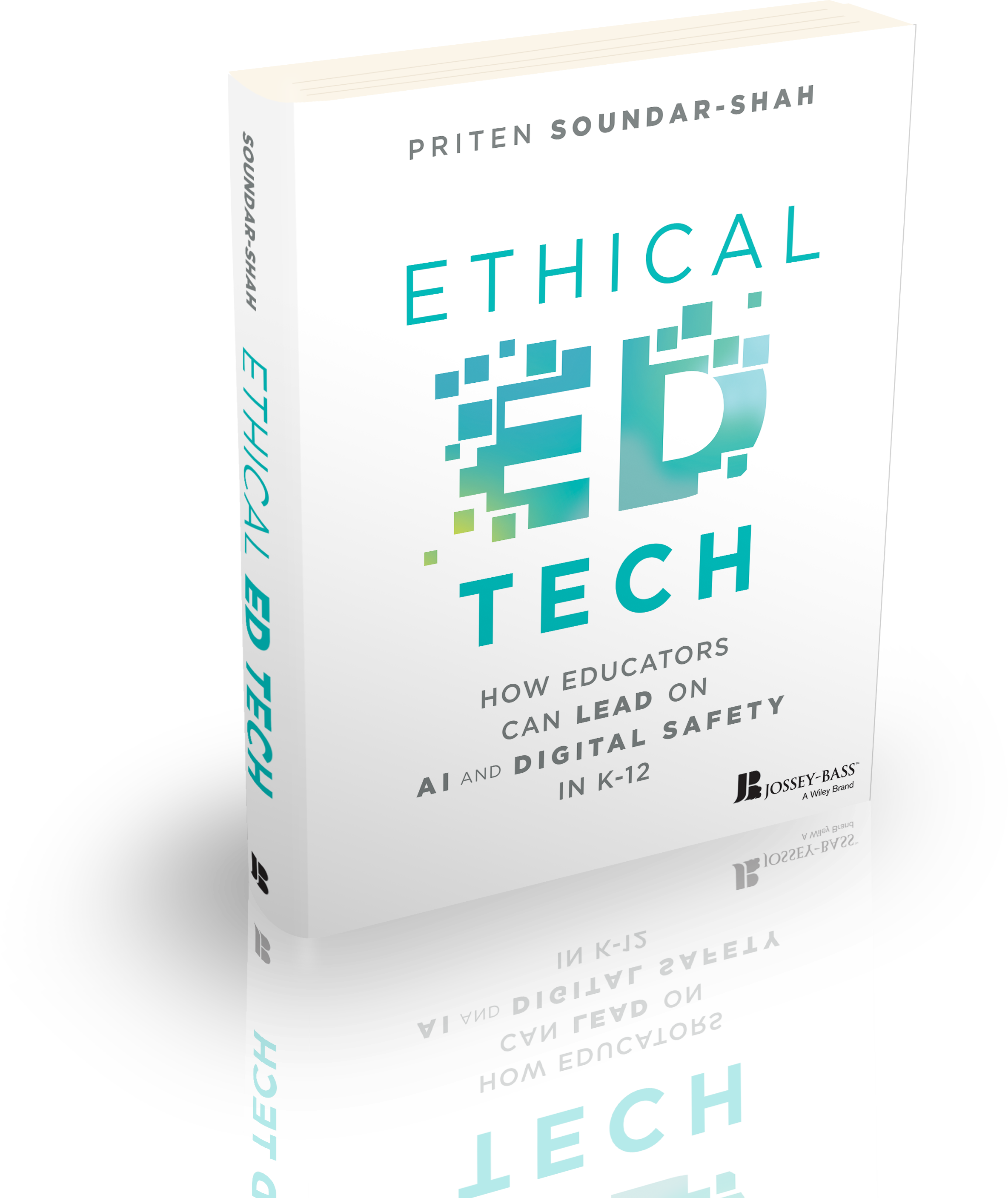
My second book, Ethical Ed Tech: How Educators Can Lead on AI & Digital Safety in K-12 (Wiley, 2026), is forthcoming. The book provides a framework organized around philosophy, policy, and practice to help educators develop shared values, build institutional infrastructure for ethical decision-making, and apply these to the concrete dilemmas they face daily. It draws from conversations with educators, technologists, and students facing real ethical challenges, and includes case studies, discussion guides, and practical tools for implementation.
Thought Leadership
My writing has appeared in Education Week, eSchool Learning, and other publications.
I have delivered keynotes and workshops at conferences including the Singapore International Science Teachers’ Conference, the Texas Computer Educators Association, the Virginia DOE Innovative Teaching and Leadership Conference, the World Education Summit, the National Council for the Social Studies, and the Responsible AI Summit. I have also appeared on over 40 podcasts discussing AI and education.
I host two podcast shows launching in early 2026: Margin of Thought, featuring interviews with educators and academics conducted for Ethical Ed Tech, and Know. Care. Act., focused on liberal arts education and civic engagement.

Philosopher

Entrepreneur
How We Teach
As Executive Director of PedagogyFutures (founded 2022), I lead efforts to help educators navigate technological change responsibly and ethically. The organization’s mission is to build a responsible, ethical, human-centered future for educational technology.
PedagogyFutures has reached over 50,000 teachers through professional development courses, lesson plans, workshops, research, guidebooks, and classroom tools. Its courses are accredited for graduate-level credit by Southern New Hampshire University and approved for state professional development credit in Massachusetts, New York, Texas, Pennsylvania, New Jersey, Montana, and Arkansas.
Major clients include Paramus Public Schools, Essex County Schools of Technology, North Carolina Department of Technology Education, and numerous school districts across the country.
What We Teach
As President of Academy 4 Social Civics (founded 2014), I work to make interdisciplinary liberal arts education accessible from an early age. I believe such education is essential to healthy democratic societies by helping people reason well about the issues that shape their communities.
A4SC provides curricula, teacher resources, and student programs that have reached over 7,500 students worldwide through summer camps, after-school programs, and online argumentative writing and persuasive speaking courses.
The organization’s video library, which covers over 250 topics with animated videos, worksheets, lesson plans, and infographics, has accumulated over two million views. Its lesson plans, ranging from teaching about race and gender to the use of safe spaces and trigger warnings in classrooms, average 50,000 views monthly.

Bridging Both Goals
Two projects sit at the intersection of what and how we teach: As CTO of Thinker (since 2018), I lead technology and finance for a nonprofit scaling critical thinking instruction through argument mapping, a method that makes the logical structure of arguments visible. The approach draws on decades of research showing that explicit instruction in argument structure produces measurable gains in critical thinking. We work with universities and institutions around the world, including Georgia State University, Notre Dame, NYU, the University of British Columbia, and the University of Texas at Austin. This work bridges the how (argument mapping as pedagogy) and the what (critical thinking as essential content).
Socrat.ai, developed through PedagogyFutures & Academy 4SC, is designed to build AI literacy and improve ethical reasoning. It provides a tailor-built environment for people to learn to think about and practice ethical AI usage. The goal is to help teachers and students to reason well about technology’s role in their lives, thus connecting how we teach with AI to what students need to understand about it.

Empowering Other Organizations
As CEO of Pedagogy Ventures (founded 2014), I help other educational organizations navigate the same challenges I address through my own ventures. The company provides consulting, technology development, and strategic support to universities, nonprofits, K-12 schools, and academic programs working to use technology effectively and ethically.
This work takes many forms: custom platforms, CRMs, billing systems, and course systems for institutions building their own programs; marketing and website development; strategic and financial consulting for nonprofits; and technology solutions that meet the specific needs of educational communities. During the pandemic, I built Classrooms.Cloud, technology enabling virtual synchronous education events that worked with over 200 organizations (schools, summer camps, conferences, and academic competitions including speech and debate tournaments and Model UN) that served over 300,000 students. This work preserved academic extracurricular activities when in-person gatherings became impossible.
My Story
Formal Education
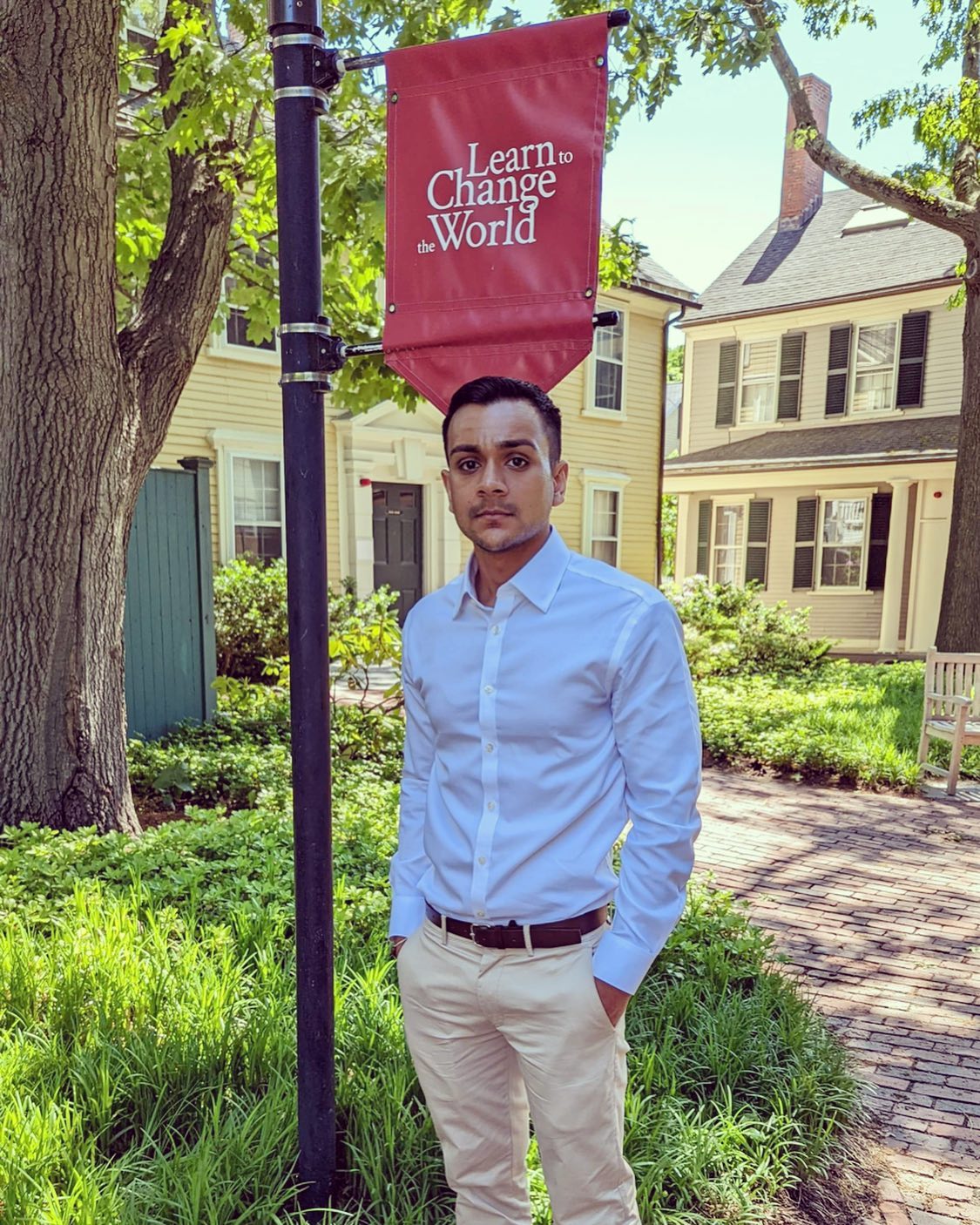
I hold an Ed.M. in Education Policy and Management from the Harvard Graduate School of Education. My graduate work focused on the political dimensions of education and justifying greater access to civics education on core constitutional principles.
I earned my A.B. in Philosophy from Harvard College, with a Secondary in South Asian Studies and a Language Citation in Sanskrit. I graduated cum laude and was named a Harvard College Scholar (2016–2017). I also participated in language reading groups in Latin, Sanskrit, and Hindi, studying texts ranging from philosophy in Latin to medieval Hindi poetry.

Self-Directed Learning
My education extends beyond formal schooling. I have developed skills in computer science and finance through practical experience and self-guided learning. My knowledge of computer science, largely self-taught, has enabled me to navigate the technological advancements impacting education. I can understand ed tech from the perspective of both developer and educator, which shapes how I think about incorporating technology thoughtfully into classrooms. I have developed financial management skills from running sustainable organizations.
Early Start
My journey into education began during high school when I chose to confront the disparities in academic support within my community. This was my first real plunge into a world I felt familiar with: school. I successfully established Teach to Learn Foundation, a 501(c)(3) nonprofit, raising initial funds through a bake sale and gathering a team of volunteers and board members.
Over five years, the organization offered free peer tutoring and classes on New York State Regents exams, SAT preparation, and other subjects (over 50 classes with an average of 20 students). This early work established patterns that continue today: building organizations that serve students directly while also developing the next generation of leaders and combining direct service with systemic thinking about how to expand access and opportunity.

Awards & Recognition
Founders Award For Service
American Debate Association, 2022 — for Classrooms.Cloud
Frank Sferra Director’s Commendation
National Speech & Debate Association, 2021 — for Classrooms.Cloud

Service Award
National Debate Coaches Association, 2021 — for Classrooms.Cloud
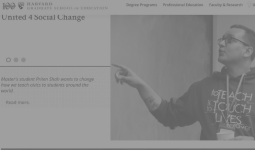
HGSE News Feature
Harvard Graduate School of Education — for United 4 Social Change

Harvard I-Lab
Accepted for United 4 Social Change, Fall 2020

25 UNDER 25
Bostoninno, 2019 — for United 4 Social Change

Harvardwood Heroes
Harvardwood, 2018 — for United 4 Social Change
Melissa Maxcy Wade Social Justice Award
Barkley Forum of Emory University, 2013 — for Teach to Learn Foundation