



Ethical Ed Tech
We Need to talk.
Educators across the world are facing a crisis about how to adapt to growing technological influence over our classrooms and lives.
The way forward? Going backwards to our roots through dialogue.
Ethical Ed Tech makes the argument that in order to make the right decisions about education technology, we need to build our collective ethical reasoning and deliberation skills.
Drawing on academic philosophy from Aristotle and John Dewey to John Rawls and Meira Levinson, Priten outlines how schools can ask the right questions so that technology serves our students and not the other way around.
The Project
As AI and emerging technologies challenge education, administrators and teachers need clear frameworks for making decisions that protect student well-being while constructively integrating the latest tools. Artificial intelligence, advanced analytics, immersive virtual reality, and biometric sensors are already reshaping how our students learn, communicate, and see the world. Their promise might seem alluring (e.g. personalization at scale, new pathways to equity, tools that ignite curiosity), but each innovation arrives bundled with difficult questions:
- Privacy: Who owns the student data we now collect?
- Fairness & Bias: How do we ensure algorithms close gaps rather than marginalize?
- Student Well-Being: Does more screen time empower or erode healthy development?
- Pedagogical Purpose: When technology dazzles, how do we stay faithful to the deeper aims of education?
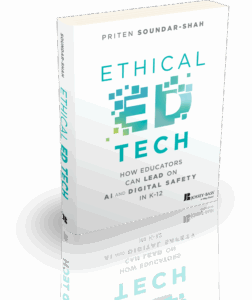
My forthcoming Wiley title, Ethical Ed Tech: How Educators Can Lead on AI and Digital Safety in K-12 will guide educators through the complex ethical challenges of implementing technology in schools.
The book use a case study approach to examine realistic scenarios that schools face daily, from AI-powered learning tools to social media policies to data privacy challenges. Each case includes multiple stakeholder perspectives, detailed analysis of key ethical considerations, and actionable guidelines for policy development.
By addressing both immediate concerns and long-term implications, the book aims to be a timeless guide for educators to make more informed, intentional decisions about technology integration
The core argument of this book is that ethical technology implementation requires community alignment across three domains: philosophy (what we value), policy (what we commit to), and practice (what we do). The book has a three-part structure to match that argument.
Looking for Discounts on Bulk Orders? Pre-Order through Porchlight!
Book Structure

Philosophy
The Philosophy section builds a shared vocabulary borrowed from theories of education, principlism and reasoning heuristics to help educators form the background knowledge to think beyond the pragmatics.

Policy
The Policy section helps you build on the reflective equilibrium process I explain in Section 1 to form policies (both to build an ethical culture and to provide guidance on Ed Tech), not for compliance, but for institutional memory and guardrails.

Practice
The Practice section has realistic case studies involving the latest technologies. These help educators practice applying the skills from the first two sections, to build the skills & dispositions to navigate complex ethical questions.
Questions This Book Helps You Answer
Real dilemmas educators face every day.
A vendor promises personalized learning but wants to retain students’ data. What do we ask them?
Our Al detection tool flagged a student for 75% probability of AI text. Now what?
Parents are divided on phone policies. How do we build consensus?
We banned ChatGPT. Was that the right call? And for how long?
How do we prepare students for a future of AI without losing what makes us human?
A vendor is pitching biometric attendance. Where do we draw the line?
supporting Resources

Case Study Assets
Role-play simulations to go along with every case study, discussion boards, and real stakeholder voices

Handbook
PD discussion guide & worksheets, sample policy worksheets, surveys, and vendor questionnaires

More Case Studies
Case studies on more complex issues and ones specific to principals, superintendents, and school boards

Companion Guides
Guide for Higher Ed to implement the same ethical reasoning process advocated for here
Why Pre-Order?

Early Access
Get "lost" chapters, early access to PD course + tools, discussion guides + workbooks, all before the book launches.

Join the Community
Access to bi-monthly case studies, philosophy deep dives, policy analysis, video lectures, and direct author updates.

Support the Work
Pre-orders help signal demand for ethical ed-tech resources.
Peek Inside
Get a sneak peek and check out the table of contents!
- 2Educational Ethics
- 3Ethical Principles
- 4Ethical Approaches
- 5Stakeholders
- 6Stakes
- 7Reasoning Heuristics
- 8Ed Tech Defined
- 9Ed Tech Themes
- 10Inherent Risks of Tech
- 11Philosophy to Praxis
- 12External Constraints
- 13Designing Ethical Schools
- 14Sustaining Ethical Practices
- 15Classroom Policies
- 16Ed Tech Governance
- 17Cases in Learning
- 18Cases in Assessment
- 19Cases in Safety
- 20Cases in Policy
Pre-Order through Porchlight for Bulk Discounts!
Stay Connected

Margin of Thought
Listen to interviews with real people sharing their stories on ethical ed tech.

Professional Development
PD for school boards, administrators, teachers, and parents.

About The Author
Priten Soundar-Shah
- Educator
- Philosopher
- Entrepreneur
“Everything I create tools, courses, or books serves one purpose: empowering educators to embrace innovative pedagogy without compromising human values.”
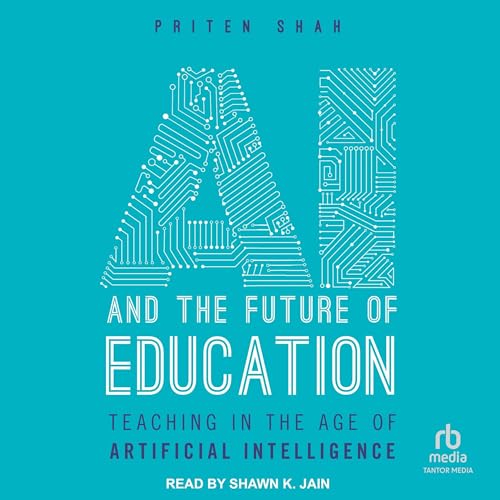
Priten is an educator, philosopher, and entrepreneur working at the intersection of humanistic values and frontier technology. He is the author of the international bestseller Al & The Future of Education (Wiley, 2023) and CEO of Pedagogy Ventures. He holds a B.A. in Philosophy from Harvard College and an M.Ed. from the Harvard Graduate School of Education.
What They're Saying:
Prefer to listen?
Whether you’re commuting, working out, or simply relaxing, let this audiobook be your guide to understanding the intersection of AI and pedagogy!