Press Kit
Everything journalists, producers, and event organizers need for coverage and bookings.
Pronounced PREE-tin SOON-dar SHAH
M.Ed. in Education Policy & Management, Harvard GSE
Faculty Instructor, College Unbound
(Wiley)
(Arabic, Chinese, Turkish, Vietnamese)
Appearances
Reached
Biography
Copy-paste ready. Click to copy to clipboard.
Short Bio
Priten is the author of AI & The Future of Education (Wiley, 2023) and the forthcoming book Ethical Ed Tech (Wiley, 2026). Priten is a visiting researcher at the Harvard Department of Philosophy focusing on developing philosophically grounded yet practical approaches to teaching critical, ethical reasoning at scale for educators and students. He holds a B.A. in Philosophy from Harvard College and an M.Ed. in Education Policy and Management from the Harvard Graduate School of Education.
Medium Bio
Priten Soundar-Shah is an educator, philosopher, and entrepreneur working at the intersection of technology and education.
Priten is the author of AI & The Future of Education (Wiley, 2023) and the forthcoming book Ethical Ed Tech (Wiley, 2026). He leads three nonprofits, serving as Executive Director of PedagogyFutures, President of Academy 4 Social Civics, and CTO of Thinker—organizations collectively focused on ethical ed tech, civics education, and scaling critical thinking instruction worldwide.
Priten is also a visiting researcher at the Harvard Department of Philosophy focusing on developing philosophically grounded yet practical approaches to teaching critical, ethical reasoning at scale for educators and students. He holds a B.A. in Philosophy from Harvard College and an M.Ed. in Education Policy and Management from the Harvard Graduate School of Education.
Long Bio
Priten is an educator, philosopher, and entrepreneur working at the intersection of technology and education.
He is the CEO of PedagogyVentures, where he helps organizations integrate technology with proven teaching strategies.
Priten leads three nonprofits: PedagogyFutures, as Executive Director, which provides professional development resources to build a responsible, ethical, human-centered future for educational technology; Academy 4 Social Civics, as President, which is dedicated to civics education that prepares students to tackle future challenges; and Thinker, as CTO, which is working to scale critical thinking instruction at educational institutions around the world.
Priten is also the author of AI & The Future of Education: Teaching in the Age of Artificial Intelligence (Wiley, 2023), which was translated into Arabic, Simplified Chinese, Turkish, and Vietnamese, and the forthcoming book Ethical Ed Tech: How Educators Can Lead on AI & Digital Safety in K-12 (Wiley, 2026). He teaches courses on the Ethics of Ed Tech, Family & Society, and Epistemic Justice at College Unbound, a bachelor’s degree-granting institution focused on adult learners.
Priten is a visiting researcher at the Harvard Department of Philosophy focusing on developing philosophically grounded yet practical approaches to teaching critical, ethical reasoning at scale for educators and students.
He holds a B.A. in Philosophy from Harvard College and an M.Ed. in Education Policy and Management from the Harvard Graduate School of Education.
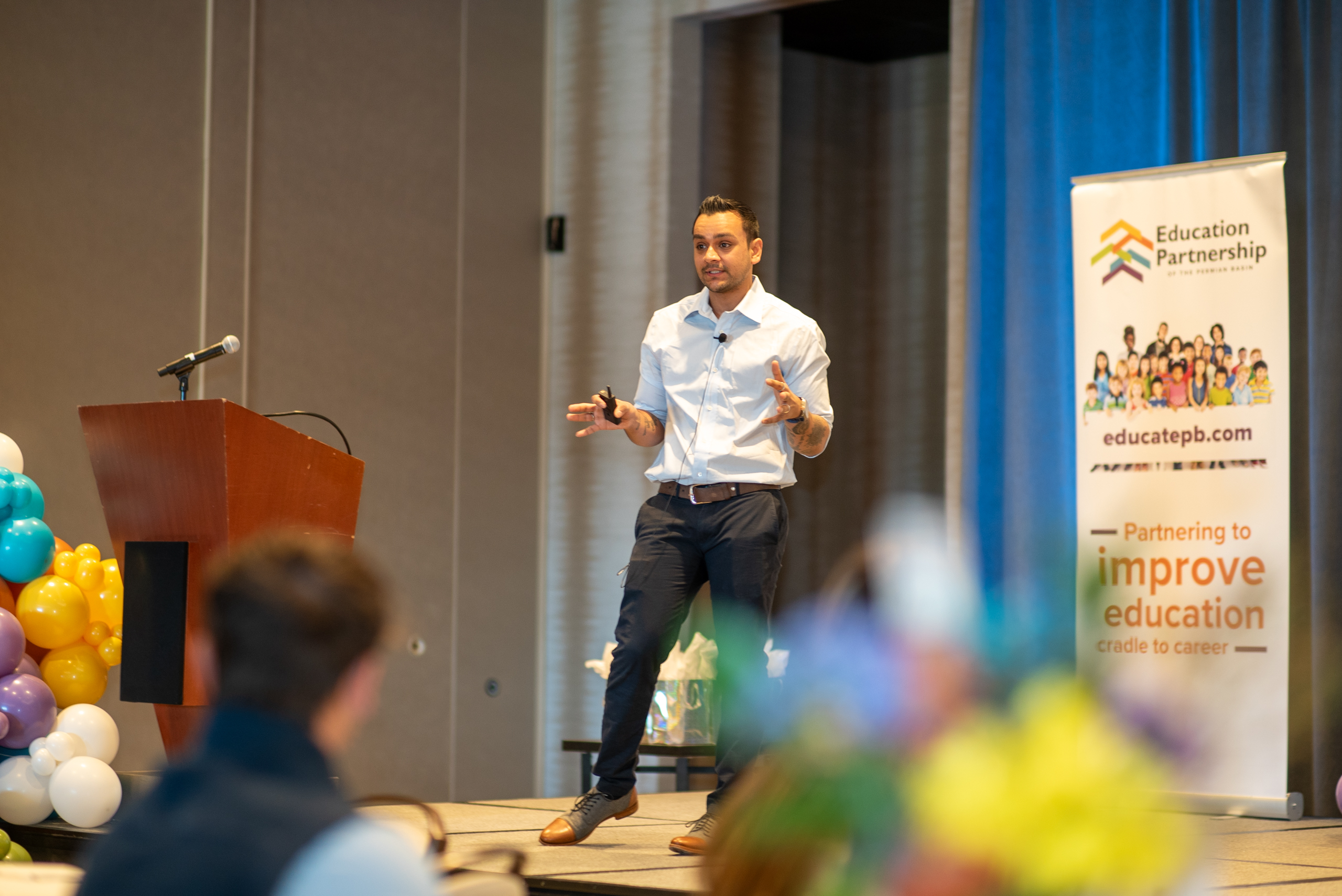
Headshots & Photos
High-resolution images available for media use. Right-click or use the download link.



Expertise & Interview Topics
Priten is available for interviews, panels, and keynotes on the following topics.
AI in K–12 Education
Practical strategies for integrating AI into classrooms responsibly, from lesson design to institutional policy.
Ethics of Educational Technology
How educators and schools can develop ethical frameworks for adopting new technologies while protecting students.
Student Data Privacy & Digital Safety
Navigating the complex landscape of student data, surveillance technology, biometrics, and privacy regulations.
Critical Thinking at Scale
Using argument mapping and structured reasoning methods to teach critical thinking effectively across institutions.
Civic Education & Democracy
How interdisciplinary liberal arts education prepares students for informed civic participation.
Ed Tech Entrepreneurship
Building mission-driven education organizations that balance impact, sustainability, and ethical commitments.
The Future of Teaching
How the role of the educator is evolving in response to AI, and what teachers need to thrive in this transition.
Philosophy in Practice
Bridging academic philosophy with real-world education challenges—from epistemic justice to moral reasoning.
Tech & Masculinity in Youth
How technology shapes young men’s identity formation, and what educators and parents need to understand about the intersection of digital culture and masculinity.
Books
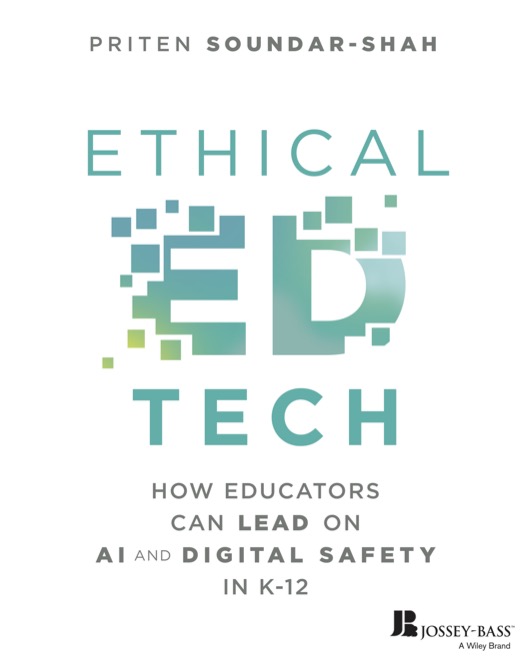
Ethical Ed Tech
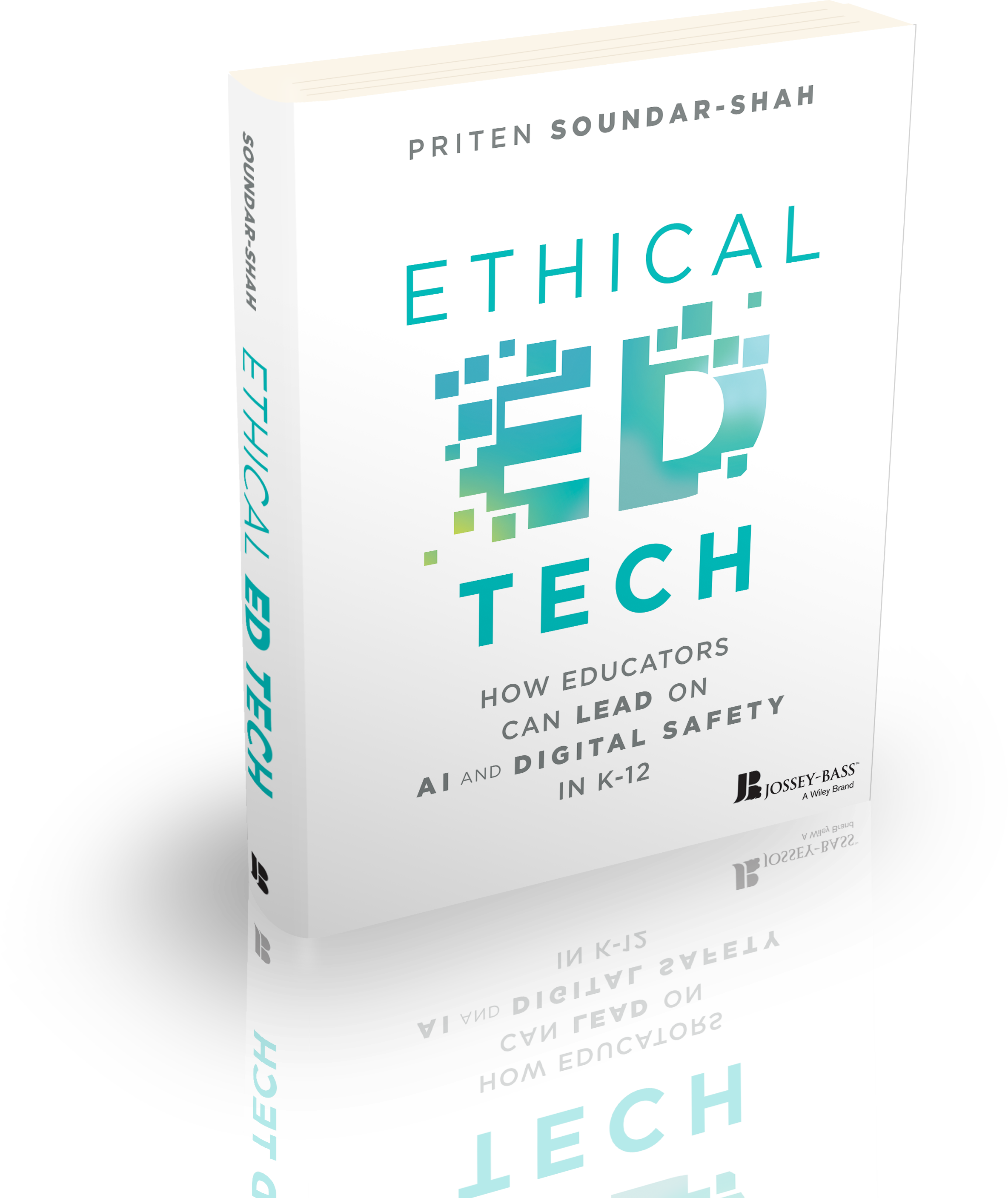
A practical, actionable guide for K–12 educators seeking to integrate technology responsibly, equitably, and effectively. Organized around philosophy, policy, and practice, the book helps educators develop shared values, build institutional infrastructure for ethical decision-making, and apply these to the concrete dilemmas they face daily. Includes case studies, discussion guides, and policy templates.
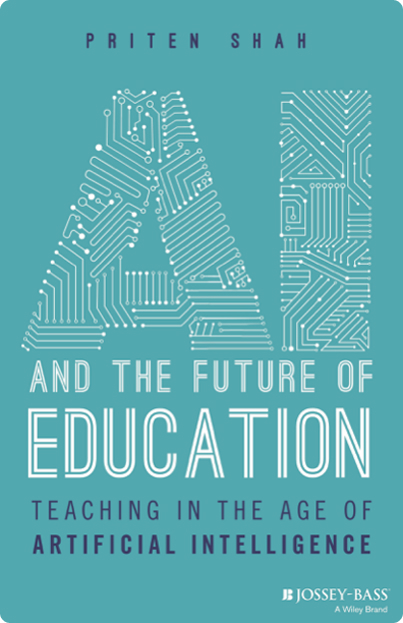
AI & The Future of Education
A practical guide that shows educators how to leverage AI as a tool rather than fear it as a threat. Covers what AI and machine learning are, strategies for deeper student engagement, automating administrative tasks, promoting higher-order thinking, and examining ethical considerations including the achievement gap, privacy, and bias.
- 230+ academic citations
- ~10,000 copies sold
- #1 in 3 Amazon bestseller categories
- Featured in Harvard Magazine, Church Times, University World News, Ed. Magazine
Organizations
PedagogyFutures
A nonprofit working towards a responsible, ethical, human-centered future for educational technology. Provides professional development resources reaching over 50,000 teachers. Courses accredited for graduate-level credit by SNHU and approved for state PD credit in 7 states.
Academy 4 Social Civics
Empowers students through interdisciplinary curricula to become informed, compassionate, and action-oriented civic leaders. Video library with 250+ topics and 2M+ views. Student programs reaching 7,500+ students worldwide.

Thinker
A nonprofit coalition of scholars and ed tech leaders working to scale critical thinking instruction through argument mapping. Partners include Georgia State, Notre Dame, NYU, UBC, and UT Austin.

PedagogyVentures
Consulting, technology development, and strategic support for educational organizations. Built Classrooms.Cloud during the pandemic, serving 200+ organizations and 300,000+ students.
Endorsements
Praise for Ethical Ed Tech (2026)
“Ethical Ed-Tech refuses easy narratives about AI and education and instead offers educators something more useful: clarity grounded in values and practice. It helps K–12 educators move beyond hype or fear toward deliberate, context-aware decisions. Its strength lies in connecting ethical reflection, classroom reality, and system-level thinking in ways that make change both possible and responsible.”
— Lance Eaton, Ph.D“Priten Soundar-Shah has an impressive ability to move between big-picture, philosophical questions about educational ethics and down-to-Earth, practical questions about what educators can do right now to make their classrooms more ethical spaces. Ethical Ed Tech is a great book that (I hope) pushes the conversation about ethics, Artificial Intelligence, and education in a more nuanced direction.”
— Jason Gulya, Professor of English and Communications, Berkeley College“As AI permeates everything, protecting what is human becomes more urgent, nowhere more than in K-12 education. In Ethical Ed Tech, Priten Soundar-Shah channels that urgency, giving educators and leaders a rigorous ethical framework for integrating AI with civic purpose and students at the center. This is the book the field has been missing.”
— Gautam Sethi, K-12 Chief Information and Technology Officer“As a parent, an educator and school leader, I’ve watched schools lurch from one tech trend to another without stopping to ask the fundamental questions Priten poses in this brilliant book: Just because we can, does that mean we should? Our children deserve better than the hollow victory of ‘getting there first’. They deserve to ‘get there prepared.’ Soundar-Shah’s framework for deliberative decision-making transforms technology choices from reactive scrambling into intentional, values-driven leadership.”
— Joseph Carver, Head of School, Academy of the Sacred Heart Bloomfield Hills“If you’re a school leader, please don’t waste your time trying to read 100 other books and articles to understand the AI landscape and how to make wise decisions under uncertainty. Simply read this book first. Priten’s depth of thought, scope of research, and wise care for all stakeholders come through masterfully, as does his ability to crisply organize a ridiculous amount of information from dozens of disciplines.”
— Nate Otey, educator and philosopher“At a time when technology in education is too often lauded rather than scrutinized, Ethical Ed Tech is both urgently relevant and enduringly significant—a courageous guide to the ethical complexities of modern education that will outlast any individual tool or trend. This is not an outsider’s commentary, but an insider’s honest reckoning.”
— Tamsyn Smith, Digital Learning, University of Southampton“Priten Soundar-Shah bridges philosophy, ethics, policy, and classroom practice with exceptional clarity, providing not just principles but practical tools for deliberate decision-making about technology in our schools. It is a timely and necessary guide for any educator looking to integrate AI and educational technology with intentionality and care.”
— Keith Yi, former HS Principal and Adjunct Professor, Inha University“Priten Soundar-Shah is a thought leader who brings a rare combination of skills and experiences to make ethical thinking accessible and practical. His intellectual rigor and understanding of education as a dynamic and deeply human field informs his framework for clear decision-making that sees through the messiness of real school settings.”
— Anne L’Hommedieu Sanderson, Executive Director, ThinkerU.org; Associate, Harvard Department of Philosophy“At a time when educational technology feels overwhelming and inevitable, Soundar-Shah offers educators something precious: agency. His framework transforms technology decisions from compliance exercises into opportunities for ethical leadership. This should be required reading for anyone with an interest, stake, or belief in the future of education.”
— Ajay Nair, PhD, President of Arcadia University“Most ed-tech books tell you what to adopt. This one teaches you how to decide—and who should be in the room when you do. Soundar-Shah has written the ethical playbook that K–12 has been waiting for.”
— Anand Rao, Director of the Center for AI and the Liberal Arts, University of Mary Washington; Professor of Communication“Priten Soundar-Shah’s Ethical Ed Tech truly gets to desperately needed foundational principles, questions, and strategies that may guide us through this, and the next, and the next incarnation of ed tech, so that we are anchored in five fundamental principles, from which we derive policies, and finally specific practices.”
— Susan Blum, Professor of Anthropology, The University of Notre Dame; author of Schoolishness“Soundar-Shah’s insights provide a clear North Star for how our communities must thoughtfully and ethically engage with AI’s growing presence in the classroom and this book contains the roadmap educators need to navigate the future of instruction. I heartily recommend it to anyone wrestling with the ‘what now?’ questions we’re all facing at this pivotal moment in modern education.”
— Jason R. Williams, award-winning educator, teacher-leader and licensed administratorPraise for AI & The Future of Education (2023)
“This book makes a strong case that generative AI models are more than obstacles for educators to work around, and that if used thoughtfully and creatively, they can help teachers and administrators prepare their students to thrive in a rapidly changing technological environment. Shah understands that using AI in our classrooms won’t come naturally to most of us and offers concrete suggestions throughout, ranging from useful tips for modifying traditional assignments all the way to insightful recommendations for reimagining what the aims of formal education ought to be in the first place.”
— Jeff Behrends, Senior Research Scholar, Department of Philosophy, Harvard University“Shah provides a step-by-step guide that implores educators to eschew their worst impulses to over-manage or hide from AI, and to instead, turn their focus to what schools, on behalf of students, must do: adapt and innovate. His book is the first step in re-envisioning the academic process and preparing the next generation of learners.”
— Joseph Carver, Chief Innovation Officer, The Meadows School“Priten Shah’s knowledge, experience, and spirit of public service in the fields of AI and education make this book essential reading for educators at all levels. He offers a must-read for teachers, administrators, parents, and policy makers on the voyage to best practices for using AI in classrooms.”
— Anne L’Hommedieu-Sanderson, Executive Director, Thinker; Associate, Dept. of Philosophy, Harvard University“While teaching in the age of artificial intelligence may be intimidating for some, Shah’s cogent and concise book is a great asset for educators, administrators, and school boards… especially help teachers better understand and incorporate the possibilities of AI as they continue to keep students at the center of all they do.”
— Ajay Nair, Ph.D., President, Arcadia UniversityRecent Appearances
Downloads
All assets are available for editorial use in connection with coverage of Priten Soundar-Shah.
Social & Contact