Podcast Appearances
Is AI Making Teacher Burnout Worse?
Resilient Schools · Ross Romano
July 25, 2024
Related Projects
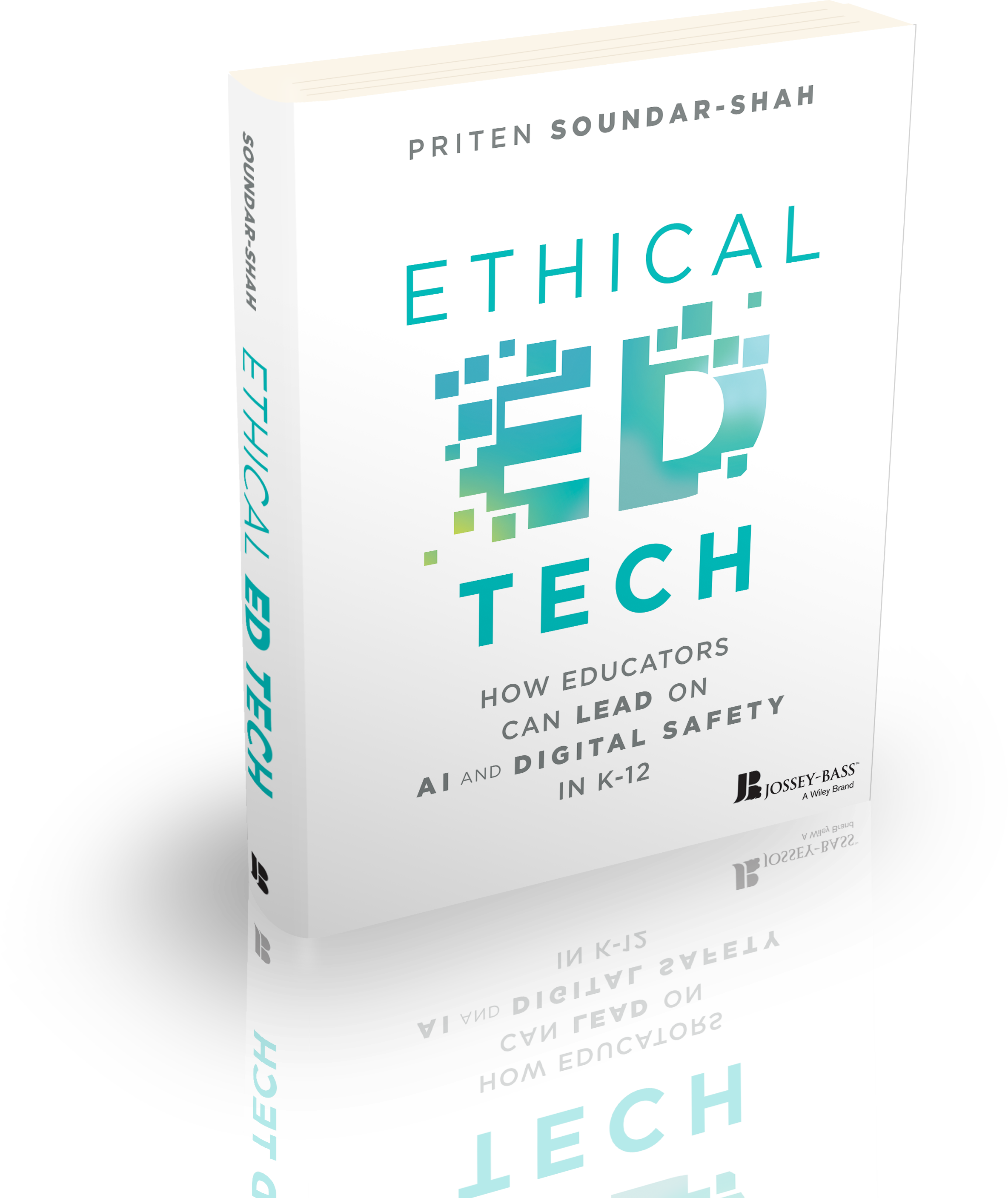
- Ethical Ed Tech: How Educators Can Lead on AI & Digital Safety in K-12
Transcript
Welcome, everybody.
Thanks for joining us for this
episode of Resilient Schools
here on the Bee Podcast Network.
Always a pleasure to have you with
us as we dive into all of the topics
relevant to school and district leaders
and the things that we need to do to
make our schools resilient, durable
able to navigate through the various
challenges we're facing in our schools
and communities and teacher burnout.
is a big one, right?
The issue with recruitment, retention,
attrition and just burnout in general.
Having educators that are feeling
happy, satisfied, supported in their
jobs is a critical part of what
it means to be a school leader,
particularly in modern times.
And along with that, right, with the
implementation of new technologies,
particularly AI technologies that teachers
are having to learn about, put time
and effort into implementation, how to
understand what students are doing with
these technologies, and being able to
balance all of that with the other demands
of their roles that is a contributing
factor to what can potentially be somewhat
of a solution to alleviate some areas of
teacher overwork and burnout, but also
on the flip side can make them feel even
more burnout when not done correctly.
So that's what we're talking about today.
My guest is Preetan Shah.
Preetan is an education entrepreneur.
He's the author of a book called AI
and the Future of Education, Teaching
in the Age of Artificial Intelligence.
He also is the founder of Pedagogy.
cloud.
which is an educator, educational
consulting firm that supports educators
in K 12 schools, higher ed, and
the nonprofit sector in adapting to
the increasing capabilities of AI.
So he's a great person to talk about this.
He also recently wrote an op ed for
Ed Week about some of his concerns
with you know, AI around alleviating
some of teachers workloads.
Some of the realities about it
could be contributing to burnout.
So we're going to dive into that and
hopefully explore in some detail.
Preet and welcome to the show.
So you saw at the advent
couple of years ago, right?
Especially when generative AI tools
like chat, GPT and others were becoming
more and more accessible and prevalent
for mainstream use a lot of potential
for those tools to reduce features,
workloads, particularly in areas of.
of overwork or, or beyond kind of what
can reasonably be expected, right?
But what did you anticipate at that time?
What was some of the promise you saw?
Yeah I was one of the people who was
really excited when the technology
came out for all sorts of reasons and
folks who've heard me speak before know
that, like, I was sitting there trying
to come up with all these personalized
learning tools and figure out how we
could kind of make these things that
we wanted to happen, happen thanks
to some of the new developments.
But it was also the reality that a lot of
the tasks that teachers often have to do
are generative and all the kinds of tasks
that these algorithms are being built.
To kind of do really well.
And so the hope was that we might able
to some of that to the AI tools and
kind of free up some future time and
resources and mental energy to kind of
focus on the things that they enjoy more.
So I was hopeful that lesson planning,
generating formative exercises, coming
up with report card comments, even
grading, all those were kinds of
things that I was like, okay, there
is a, there is a future in which.
That technology can start
taking someone right away.
Maybe not all of it's doable
or ought to be done right away.
But, you know, I was excited.
There's, there's some potential there.
Are there some of those areas in
particular that, I guess, from the
teacher perspective, like, based on
where they're hoping to save time, save
workload how did those kind of break down
as far as there are certain areas that
are just, you know, This is something
that just You know, we can never capture
it within its container, basically.
Like, it always takes more
time than it should, and it's
nights and weekends, right?
I'm sure that's certain components, and
then there's probably others that's,
well, if we could spend a little bit
less time on this thing, then I have
more time for the real interpersonal
work required in these other areas.
Can you sort of give us a sense
of how some of that breaks down?
I think we've found that it differs
greatly from teacher to teacher.
When we're talking to folks,
there's some folks who say, look,
writing a lesson plan is like, I
already have most of mine written.
There may be some tweaks I make.
And at the end of the day, like, I can
spit one out in 30 seconds because I've
been teaching for 35 years, and this
template is like, back of my hand, and I
can kind of do this really quickly, and
so, by the time I even figure out how to
use an AI tool for it, it makes no sense.
And then we have some teachers who say
they love the opportunity to use these
tools to kind of come up with more
innovative lesson plans and figure out
how they might, you know, use project
based learning or use pre based learning.
You kind of push the creativity of
how they teach a particular topic.
And similarly, we see that, you know,
along the entire spectrum of tasks.
And so the way we like to think
about the teacher tasks are the
ones that they do on their own time.
So lesson planning, building worksheets,
formative exercises making essay
prompts, those kinds of things.
The things that they do with the students,
and so what you do in a classroom, whether
it be everybody open up your computer and
you're now talking to an AI tool or let's
create something to do together in class.
Or what the teacher does with stuff that
they receive from the student afterwards.
And so the grading and feedback
are mainly where, what the, the
thing that fall into that category.
That's where we see the, the
largest split with folks who
are, say, Look, I hate grading.
I hate having to go
through all these essays.
It takes up way too much of my time.
This is what I'm doing
at the dining table.
There's a reason why, like, all these
essays have coffee stains on them.
I'm always behind on the grading.
And so help, you know, providing real
personalized feedback on students writing
or whatever it might be would be huge
in terms of their quality of life.
We also have lots of teachers
who say, no, like, that is the
one thing I always want to do.
Like, I want to be the one who
provides the feedback to my students
so I know how they're performing so
that I can kind of take into account
the context that I know about them.
But this is where you start to see
a lot of, like, variation between
folks initial, like, gut reaction.
the AI technology.
Some folks see it as another tool.
Some folks see it as an
invasion of, of teaching itself.
And then some folks are worried about
what the long term means for it.
So, you know, I think that's
true of all the kind of different
types we can talk about.
Yeah, so there's this potential
that we see right now.
We're recording this in July 2024.
So we've had this entire past school
year where these tools have existed and
been available in some form or fashion.
Obviously, they're continuing to evolve,
but certainly since prior to this year,
chat GPT has been out there, other
generative AI tools, you know, being used.
Google's tools, Microsoft, et cetera.
In addition to, to all the different,
you know, various startups and
apps that are using AI in, in
more forward thinking ways.
So what's, what's the reality, what's
actually happening in schools if
it's different from the potential
of what we imagine might happen, you
Yeah.
Most of the time there is a lot of fear.
a lot of hesitation.
And folks are overwhelmed.
That is, you know, at
the end of any session.
And so we, you know, I, we've
done sessions that are an
hour long at the shortest.
Luckily, we haven't had to fit
anything into a shorter period
of time to entire day workshops.
And no matter what it is at the
end of it we feel the amount of
processing that's going on from folks
because it does change quite a bit.
There's positive changes.
There's all these cool
things folks want to try.
They want to spend some time figuring
out how they might incorporate it.
And there's negative changes.
They have to figure out what they
might change about their assessment
style or what they might need to
incorporate into the curriculum.
But no matter what, folks are,
are definitely not seeing this
as like the burnout cure that
I think it was branded as.
Among, you know, I was part of the,
I, I, I was like, oh, this might help
with teacher burnout was kind of like
one of my go to taglines as well.
But I think folks are starting to
realize that it could get there.
There is a world in which
it reduces teacher workload.
But the pathway was hard.
There, there's a lot of learning
that teachers need to do in order to
actually make use of these schools
effectively which requires time,
money, and of course, space to do so.
And there's a lot more burden
that comes with AI as well.
That's not just let's
make lesson plans quicker.
There is a, how do I, you know,
reorient my classroom assessments
in order to be AI proof or actually
you know, prevent the students
from being able to cheat so easily.
Are there things I want to change
about my curriculum that will, are
going to make it more relevant for my
students as they, you know, adapt to
the world of AI and prepare for whatever
world that they're going to inherit.
And so, you know, Yes, it's nice and easy
to make a lesson plan on ChatTPP, and it
doesn't, it's not a massive learning curve
to do that, maybe but the rest of it,
it takes quite a bit of effort and we're
finding that teachers don't find that
they have the time and space to do so,
and that, that's definitely a concern, and
surveys are backing this up most school
districts across the country are still
not providing formal PD, to teachers.
And I think that's different.
That's, that's an easy
win for a lot of folks.
If we can start providing structured
learning time for teachers to start
exploring these pools, get some
background knowledge that would be great.
There's also the hesitation, right?
They feel like they need to know
everything about it and things
are moving extremely quickly.
And one of the things we like to do
is, like, pump folks down and say,
we're all feeling this way, right?
Even the folks that, who are into
faith who are reading every article
that comes out on AI in education and
trying to stay up to date with things.
Every morning that I wake up and I see
my, like, newsletter backlog or see
what's happened I feel like I'm, I feel
like I, like, no longer know anything.
And I'm going to need to spend
a lot of time catching up.
And so I can only imagine as an educator
when every time you open your Instagram or
your Facebook and there's some new update
that says it can do some new thing the
level of overwhelm that that can cause.
So, yeah, there's,
there's definitely a lot.
Yeah,
And I can imagine and
interpret that there's.
a number of different areas where
teachers are looking for help.
Some may be heavily weighted
toward one or another.
Others may be looking for all the above,
but I, you know, I think there's general
kind of mindset and confidence issues
around, you know, embracing or becoming
proficient with new technologies and
just even feeling like it's possible.
I think there's specific training
around tools and how to use them and
how to feel like using them effectively.
There's AI literacy around what the tools
can and can't do and, and what we should
try to do with them and what we shouldn't.
And then also as far as students, right?
Understanding what are the
things students can and can't do.
What are the things to look out for?
What are the things that we need to
redesign or think about differently.
And then within all of that, the time
and space, as you referenced, right?
Am I being given an opportunity
to realistically do this?
If I know that we need to rethink the
way that we do you know, accessible
assignments or whatever that
looks like in today's classrooms.
And I need to re plan those
and design them differently.
Do I have a chance to do that?
Do I have some guidance on
what that might look like?
Do I have support from my administration
when it's clear that there's a
particular type of assignment that
we should encourage students to
leverage some of these tools for
and to learn how they can help?
That.
That's going to be encouraged
and supported versus viewed as
like, I shouldn't be introducing
students to them, et cetera.
Are there certain things that are
really like standing out from the
educators you're speaking to when you
walk into that room and everybody's,
you know, maybe feeling like, why are
we doing, you know, are the particular
things where they're saying, look,
this is what's standing out to me.
This is where I need the most
help, or this is where I'm just
feeling like the most overwhelmed.
I think keeping up with the
updates as to what the tools can
do is definitely a key concern.
And I think it's more, it's not even so
much that they want to keep up to date
because they want to make sure that
they're using the tools most effectively.
Because I think most tasks that folks
who want to use AI tools for can,
once you've kind of experienced the
technology, you can kind of play
around and pick up on it intuitively.
Yeah.
The fear definitely seems to be about
what students can do with the, with the
AI tools, and so that's where the larger,
just like, what, you know, yesterday it
couldn't cite sources, today it can cite
sources, it couldn't do math, now it can
do math you know, like, what, what exactly
are the tools capable of and where, where
is it going is definitely the largest
concern, how to keep up with that, right,
so you know if your assessments that
you're sending home are still you can
preserve integrity with those or not.
And then the second place is
they also want to be able to tell
their students why they're still
teaching what they're teaching.
And I think that that's, you know,
these are the larger questions where
they require so much time and space
for us to kind of sit and talk with
each other and sit down with, you know,
all stakeholders and figure out what,
like, what is the value of writing an
essay still so you can justify it to
a student who could now generate this
essay at the, you know, at the tip
of their fingertips on their devices.
And so.
This is where I think the support
from admin to kind of have those, that
time to sit down with your colleagues
and say, okay, here's how we're going
to, here's how we're going to talk
to our students about what they're
allowed to do with the AI tools.
Here's how we're going to explain to them
why we still want them to do these tasks.
Here's how we might use these tools.
tools ourselves in order to kind
of streamline some of our work.
And then the final piece is there
is, there is some room to bring
these tools into the class, right?
We, we do think that students need to
start building some of that, the AI
literacy that you just mentioned by
using it in supervised settings with
teachers, know what's ethical, know how
they can use it to augment themselves
rather than replace themselves.
But teachers are afraid to do that because
there's a baseline level of understanding
they want about the tools before they're
going to expose, you know, entire
classrooms full of students to the tools.
And so, this is where, you know,
until teachers build that initial
comfort level with the tools and the
technology, understand how it's built,
understand how you can use it safely
it, it is hard to expect them to
suddenly, you know, have everybody open
up ITPT on their school computer in
in, inside the classroom when they're
not sure exactly how might that go.
What are, what are administrators saying
when they, are they feeling the same?
Are they feeling that, okay, I can
tell that my teachers are feeling
some additional burdens here.
What approaches are they trying to
take you know, to, to support that?
Or are they feeling like they're at
a loss to, to really know what to do?
yeah so, I mean, it was selection bias
here in terms of which administrators
I'm speaking to after the ones who kind
of realizes the problem and realize that
the teachers need support and I've kind
of like sought help to kind of get some
guidance as to what kind of PD they can
provide we often get a lot of requests
for train a trainer type PD where we can
kind of work with department chairs and
department heads to kind of get them up
to speed so they can kind of navigate
this for the rest of their teachers.
And we find that to be very effective
because they have a peer in the department
who they can kind of go to for questions
and kind of promote further training.
We do, the admin are, are still very
skeptical of student usage of the tools.
They're, you know, a lot of these tools
are still not signing agreements that
need to be signed in order to meet some,
like either state laws in particular
admin are afraid of what parent backlash
if the tool are kind of like integrated
more heavily in the, in the classroom.
And it's also time we're all
talking about like banning cell
phones and reducing screen time.
And so suddenly they'll also be
having conversations about how we
bring AI tools in front of students.
That, that's one where we
see the most skepticism.
This, we're, there's definitely been a
trend, like, you know, last summer versus
this summer, we're already seeing a
massive difference in terms of like the
willingness of admin to kind of start
thinking about how do we budget for which
AI tools we want to have our teachers
ought to have access to in the fall.
What are our PD days look
like when it comes to AI?
And those are all promising thoughts.
And so that we're excited to see
that folks are responding to the
teacher's concerns about not getting
enough support and are seeking out
those resources because there's
tons of resources out there, right?
There's lots of options for folks to kind
of, you know, either on their own or in
school settings kind of come up, get up to
date with what, where the technology is.
And I think the, the other thing
is folks kind of realize that
it's, this is not a static thing.
So, one of the things we heard a
lot more earlier this year than
we hear now is we're gonna wait to
see where this technology ends up
before we take our next steps, right?
Like, we can't build a, you know, a
school policy on it or honor policy on it
because the things aren't static and so
we're waiting for things to kind of like
slow down a little bit before we approach
creating a policy or bringing in you
know, doing PD with our teachers on it and
we're subscribing to any particular tool.
I think folks are realizing
that the pace of development
is just, is, has been ongoing.
If anything, it's gonna
keep getting quicker.
And so they're, they're kind of
realizing that this requires a bit
more of a nimble iterative strategy.
And so that's, I'm glad to see that.
I'm glad to see that folks are realizing
that this is not gonna be a one and
done, we have one AI policy, we do a PD
workshop, and then this is that's it.
Everybody is good to go.
And that's different.
That's different than any other
crisis that education has had.
It's different than any other,
like, right, like, tech moment.
And so, you know, when Microsoft
Word came out we spent years training
teachers on how to use Microsoft
Word and Excel and students on it.
But it did plateau at some point, right?
There were new features that
came out every time, you know,
every version came out.
But it wasn't the drastic
differences that we see every
time a new AI model comes out.
And so, it's reasonable to have
that level of let's try, like, why
can't we just like freeze this for
a little bit and it'll catch up?
And maybe that will ever
some come at some point.
But I don't think it's coming
and I don't think anyone in
the field thinks it's coming.
Right.
Yeah.
I mean, and there's going to be
leaps forward that are clearly
have high potential others that are
confusing others that are that that
seem to, to not be super useful.
And I think, I mean, it sounds
like there's opportunities here
for some individualization of goal
setting you know, as far as the
different goals that, that you have.
different educators may have for
what they are hoping to get out
of the tools, particularly when
it relates to how it affects their
own personal practice, right?
Their ability to streamline or save some
time on certain tasks that they have to
do that, you know, You know, that there
could be a, they could have stages where
they can get used to it a little bit
at a time, not feel like I have to do
everything all at once, or I have to do
it the same as everybody else is doing
it, because it really is about me and my
own comfort level with what I'm doing, and
also for them to be able to think about.
You know, I think that question
that relates to all types of
technology, software, things that we
implement is like, is it worth it?
Is it, is it worth the effort?
That I'm going to put into learning
how to use this and going through
the implementation for whatever
outcomes it's going to give me.
And even if I see really promising
outcomes it's still a new thing.
I have to add on to what else I'm doing.
And so I have to believe that.
It's better and not just different, right?
I have to believe that on the other
side of that effort and that learning,
there is a better way of doing things.
There is better student outcomes.
There, you know, it enables me to do my
job in a way that that I want to do it.
And that is, you know, It's either
currently not possible without using
this technology, or that enables
me to, you know, to kind of do
something in a different way, right?
Versus just, I think, you know,
for a lot of people, right?
If we think about some of the things
that some of the tools are used for
people are grappling with and having to
reconcile the fact that they're here to
stay with, if they didn't exist, right?
We'd be fine, right?
Like, if I can use generative
AI to write an essay.
Well, that's, it's not going away.
So that, that capability is now going to
exist and it's only going to get better.
Is that, you know, on its face, does
that have any value to a lot of people?
They would say, well, not necessarily
like, why don't you know, but the
reality is it now exists and in
five, 10 years, as these kids are
going into the workforce and whatever
the economy is going to be, like.
Being able to do these things manually
without technology is no longer really
going to be that valuable because
everybody's going to have access to this
technology, they can do it that way.
And you're fighting against the tide.
So, I guess to try to leave this door
to question it's You know, what, at the
individual educator level, I guess, in,
you know, conversation about them really
thinking about, what are your goals here?
You know, what are the things
that you hope to achieve?
And how do you work toward those?
What might some of those
conversations look like?
Because I think that There's a lot
of opportunity there versus just
saying as a blanket statement, okay,
this is what everybody has to do.
As you've already referenced, right?
There's a, there's a lot of variance in
what are the things that, that different
teachers are most interested in,
yeah.
And this is, you know, we try to like
ground folks with this as well when we're
doing some of our workshops, because
reminding folks that like, if you don't
want to use these tools in your personal
workflow, you don't have to is important.
And so we start with like,
this could save you time.
This might give you some, you
know, help you ease the burden of
having to do a lot of paperwork.
It might give you an avenue for
brainstorming and creativity and kind of
be a nice little thought partner for you.
But if it's none of those things, You
should still play around with them,
and that's that's what we try to like
convince them of in that like them
building that literacy with the tools,
that fluency with the tools, is what's
going to help them navigate two things.
The first is, Making sure that they
know what their students are doing.
And at the end of the day,
building effective assessments
is a component of education.
And until the teachers have fluency
with what the tools are capable of
they won't know what the students
could also be doing with the tools.
And so even if you never want to use it
for your own workflow, you might still
decide that you want to play around
with these tools so you can keep up to
date with what the students are doing.
The second is, and you alluded to
as well, is the tools will play a
role in a student's lives, right?
They, whether it be.
How they learn in college, whether it
be in their careers and part of, you
know, a part of our education system
is to prepare students to use the tools
that they'll, like, have to use later
and we don't want our students to be
disadvantaged against students who are
being exposed to the tools and have
movements in the tools and can thus, like,
take on positions that require using AI.
And we, like, the data on which
industry will be affected by, which
industries will be affected by AI is
very conclusive that it's everything.
There is, there is nothing that will be
spared in some way or another, right?
Like, maybe it's not, you know, I'm
not claiming that everything will be
done by AI, or we'll have, like, AI
robots, like, taking care of every
single one of our tasks but there, there
is no industry in which AI will not,
like, have some impact and having the
fluency with these AI tools will help.
Our students, you know,
work in that world.
But the other thing is kind of starting
to have this convers the larger
conversation with students about
what, what is ethical usage of ai?
Why not they use their voice
when they're writing that essay?
Even if they can generate it
with Chi GPT, what is the point
of developing your own voice?
So look, kind of conversation.
Teachers are much more able, like,
effective at having them if they
can speak to the students with
the same level of tech expertise
that the students are, right?
Like, when you're trying to convince
a student that, that writing an essay
is still valuable, if you can't answer
their concerns about why, if AI can
do it or if AI is going to take over
this job or that job why they still
need to learn these skills, you're
a less credible person to them.
And that's just the reality of, like,
the media our students are exposed
to, what they're seeing, right?
Like, what they're hearing, the
conversations that they're having.
They're also afraid, right?
Like, they're afraid about what this
means for their future and they want
to feel like they can come to you and
have a real conversation about what role
does what we're doing in the classroom
play for my life long term and I think
teachers kind of need to have that
fluency with AI tools themselves to have
those conversations for our students.
And so, again, I don't have any, you
know, like I, I'm someone who's still
like to do list notes all on paper.
Like I am, I'm a very techy person.
I code, I build websites.
I like to try to find tech
solutions to those things.
But when I have to write a to do
list or if I was taking notes in
any setting, I still find myself
gravitating towards pen and paper
because that's what works best for me.
So just because tools exist that
are way more efficient or way cooler
or can sync across all my devices
doesn't mean I have to use them.
But it's good for me to know how
to use them so that I can have
conversations about them with folks,
especially if I'm an educator and
I know my students are using them.
right?
Yeah.
I think even, even in the areas where
educators may have skepticism, like
you still have to know what it is so
that you can speak to that and have
those conversations because these tools
at least currently have limitations.
In the future, some of those limitations
may be addressed, but there's, there's
good reasons to say, well, we shouldn't
try to rely on this technology to
do this because It might have an
inaccuracy or it might, you know,
whatever the case may be, right?
Even with some of the teacher tasks
around grading and assessment, you know,
there's a certain level of leaning on
the tool that probably wouldn't be wise
because it would either be, okay, are
we checking it for accuracy or there
might be some issues or, or am I still
getting the information that I need?
As a teacher to know what to do
with that information, right?
And what, what kind of instruction
to deliver and all, and, and same
with students being able to have
that dialogue with them around.
Did you use the tool for this?
What did you use?
How did you use it?
Okay.
What, what were the results like
that literacy, that media literacy
for the new age of understanding
where does information come from?
What's it telling us?
Does it add up, you know,
what does that mean?
And if, yeah.
You're just shutting down that topic of
discussion, right, and not, not inviting
dialogue and not, or not informing
yourself enough to be able to speak to
it and engage in the dialogue, and it's
only going to lead to worse outcome
because students either won't engage in
the tools at all, in which case they're
not, developing the skills that they
need to be successful in the future,
or they'll be using them maybe in, in
less effective ways because nobody's
giving them any guidance or, or helping
them work through it, or they think
they have to do it in secret, right?
And you know, that's, that's
ultimately not obviously going
to be such a great thing.
What, you know, with respect
to, I think this like kind of
works off of that same point.
that we know there are currently
limitations, whether it be just certain,
you know, Functions that the tools can't
yet perform, um, reliably with respect
to, you know, mathematics or, or kind
of real time information or things like
that, where there, there tend to be some
inaccuracies or cultural biases, right.
From the data sets, those kinds of things.
With also understanding that they have,
Extraordinary, you know, capabilities
already and, and that potential to evolve
and that educators have a really good
understanding of what the goals of their
profession are, what their goals are
for students, like how can educators, I
guess, get more involved in advocating
for development of better tools to better
serve the need that they have, right?
Versus, versus just, you know, Evaluating
and critiquing what currently exists
and how it does or doesn't match what
they need, like, how can they be more
involved in saying, look, if we could
have something that would help us with
this, that would really be meaningful, or,
you know, this other thing that's being
developed, like, It's not that it's good
or, you know, it's, it's good or not good.
It's that it's not really serving
a meaningful purpose, right?
I'm sure there's plenty of that,
but, you know, in order to make
sure that these tools are actually
developed, I think that's an
opportunity for that kind of advocacy.
Yeah, and I think you know, this is a
nice part about just like the education
technology market in general I think folks
are kind of out there listening the folks
who want to listen are listening about
how they can better serve students and
teachers and figure out exactly how to
build things that are useful for them.
I think It's very easy.
I think oftentimes there's
like new flappy stuff.
And teachers will kind of like play
around with it and realize that it's not
the right fit and their gut says a lot.
Because they, they have the context
to kind of make that initial call on,
okay, this is kind of a, you know,
they're, they're nicely branded.
Pretty new thing with flashy button but
this doesn't actually achieve anything
for me and I think some of that, like,
that self selection, natural selection
will probably take, will hopefully get
some good exactly what teachers want.
But in the meantime, what we've been
encouraging teachers to do is try to
use, like, the, the larger models.
directly as much as possible.
And so, like, while we even have, like,
our set of, like, feature tools, we always
use those as stepping stones because
the ultimate goal is if you, if you know
how to write a good prompt, if you know
how to use these initial systems well,
then you're a little bit less reliant
on some third party to kind of figure
out exactly how, what your needs are
and you can kind of communicate those,
communicate in quotes, rather directly
with, you know, or whatever, to get the
output you want and the way you want.
Same time, little larger questions about
like policy making sure that like folks
are are building that literacy so they
can have conversations in their schools
about which tools that they're going to
subscribe to, which tools you're going to
introduce what state policy looks like.
They're still, majority of states still
have not released any sort of AI policy
and they do often not as much as we'd
like, but they do turn to educators
for some guidance on building education
policy and so articulating what concerns
you have, what kinds of tools, like
guidance you're looking for, what kind
of things you want in policy, right?
I think oftentimes we hear from
teachers especially that their school
doesn't have an AI policy and AI
policy is a pretty ambiguous term.
But often what they mean is, what
are teachers allowed to use it for?
What are students allowed to use it for?
What are, you know, what's, what's
considered a breach of data privacy?
Are they allowed to use it for IEPs,
or use it for recommendation letters,
or only to build lesson plans?
Those kinds of questions
they're all seeking answers to.
And I think continuing to push whoever
is you know, in charge of your local
School district or your institution as a
whole to kind of give you some of those
answers that there's some consensus or
something we can all work off of at least
is a good idea because I think every,
this is where like everybody kind of,
you know, messing with things on their
own, especially students, some teachers,
but there's no like coherent strategy
around it and figuring out, okay, this
is, this is how we're going to approach
it as an institution, even if it's at
the school level in a way that does
service to our students and not just
kind of ends up being this haphazard
everybody go play with it on your own
and then maybe you're using it right,
maybe you're hurting yourself, maybe
you're sharing too much, like, you know,
lots of open questions that I think
are kind of really important to answer.
right.
So what's the outlook now?
I mean, has the outlook changed?
Or is it just going to take a little bit
of a different route to getting there?
Yeah I'm still an optimist.
I think I'm an optimist when it
comes to the human element of this.
And so I think my ideal, and I think
what we're working towards, and I think
that what I think will, is achievable
is that we find ways to kind of get rid
of the worst parts of most of our job.
And find ways to kind of focus in
on the things that make the teaching
process more fun for all of us,
more engaging for all of us, help us
build a relationship with students.
I do think it's, there's,
it's, it's a long haul.
I think there's folks have to
see that this is not a short term
skill set that you're picking up.
I think that, that's another
reason why it seems so daunting.
It's because if it's just yet another
tool as all the other tools that have
been thrown at you in your, you know,
three decades of teaching it feels a lot
more daunting of a curve but when you
think of AI, not as like, oh, cat TPT,
or this particular education AI tool,
but more as a, as a, as a like era of
society as I was going to change careers,
I was going to change the world, I was
going to change how we interact in every
aspect, not just this new ed tech tool
that, that will kind of help calm folks
down a little bit and kind of be able
to start thinking about this in the ways
that will allow them to make use of the
technology and adapt to it appropriately.
Right.
Yeah.
So, you know, to kind
of wrap this up, right?
The the biggest piece here to think about
is What is teachers experience with this?
What are they feeling?
What are the areas where they're
feeling burdened, stressed, overworked?
And are we finding ways to alleviate
that or are we adding to it?
Right?
And, you know, ultimately, of course,
the goal in our schools is, is to
student learning, student outcomes, and
teachers are critical to driving that.
And when we have teachers who
are either overwhelmed or or
are exiting the profession, then
we're not able to serve them.
And, and this is a big piece of it.
This is what's happening in schools.
And these are the questions to grapple
with to not be afraid to of these
technologies, but also to be mindful
of, especially if they're like, if
we're prioritizing them, right, that
that it also means that we at least
need to temporarily maybe deprioritize
something else, shift something else
to say, look, we really need to get up
to speed on learning how to use these.
So we're going to have to move another
training or something that maybe
we do routinely, but we know that.
teachers know how to do it, right?
That, that it can't always be added
on to another thing and also it's
a good opportunity, you know, I
think for, for leadership to be
thoughtful and mindful about what.
What tools do we want to
pursue at a given time?
Are we really tuned into the voices
of our teachers about things they're
looking for help with that they would
like us to consider implementing?
And how we support that to happen.
And, you know, in so many ways, the
good thing is like not a different,
not really a different set of
considerations as Always but a new
opportunity to continue getting better
at it, you know, in areas where these
same questions always come up about
implementing new tools, what is it for?
Is it just another thing?
Is it really useful to me?
Can I use it?
Et cetera.
And you know, it's certainly with respect
to, you know, to the transformative
nature of what this might do for students.
There's a little bit of a difference
there and everything is augmented,
but but the same questions to ask and,
and, but to really be aware of that
educator experience and making it a
positive one and, and enabling them to
feel, Bottom line, biggest thing, like
they're effective at what they're doing.
Like they are effectively helping
their students to be successful,
to be prepared for the future.
That's the tipping point of burnout.
I think in, in such a high percentage
of cases is yes, this is hard work.
I'm working hard, but the thing
that either makes that feel
like a worthwhile investment or.
A waste of energy is what's
happening with my students.
And if I'm like Okay, I'm trying
to learn all these tools and having
all these things thrown at me.
I don't really know what's going on.
I don't know.
And, you know, and I don't really feel
like it's helping my students or or I
sense that they're just as lost as I am.
If I'm a teacher that that is in the
profession for that reason, right,
I'm going to draw the conclusion that.
I don't know if I can do this versus okay.
It's a lot, it's, it was a lot to
learn, but I can see the results.
So, you know, any final points
on that for for, you know, the
leaders who are figuring out,
okay, which way do we go here?
What do we try to take on?
What are our timelines, right?
Like understanding these things are
moving fast and we can't be complacent
about it because it's going to continue
to, to move forward at the same time.
We have to have a Progression.
We can't do everything
all at the same time.
Yeah, no, and I think, I think we've kind
of touched on it, we can just highlight
them are like, I think, building time
for teachers to kind of learn about what
where the field of AI is these days,
what the newest developments are that are
relevant to education, and then what the
top tools that students might be using.
Are a very easy place to start.
I don't think it has to, you know, like
the, it doesn't have to be a a year long
campaign or PD about one particular,
like, ed tech company's tool it can be
very general enough to give them the
kind of, like, baseline foundational
knowledge so that they can go explore
and do some learning on their own, right?
Like, give them, if they, if you're
giving them time and space to do these
things in PLC meetings and department
meetings, to kind of have conversations
about what all this means after they've
built that foundational knowledge.
They can, they do have the
capacity to do that once they've
been given some time to do so.
One, the problem is when you're
overburdening them with any, all these
other whether it be alternative PDs
on things that are not as timely.
Or treating as a non issue altogether I
think is when teachers feel a little bit
more lost because they see the impact
it's having on their students learning.
They see what it's doing to their
assessments, they see, they hear
students talking about it and so at the
least, giving them some time to catch
up with what our students are using
it is definitely is very high priority
in fact, probably like a September,
you know, first week priority in most
contexts and so that, that, that's,
that's I hope folks are finding ways
to build that into their you know,
summer and back to school PD time.
Excellent.
So listeners, you can hear more,
learn more about Freeton and Pedagogy.
Cloud on our EdTech
Startup Showcase Series.
We, you can find that in whatever
podcast player you're listening in, or
we'll also put the link below so that
you can find it wherever you'd like.
You also can visit his website and
we'll put the link there as well.
So you can learn about
the work that Pedagogy.
Cloud is doing.
See if there's anything, any resources,
any support there that would help you with
your current efforts and visit bpodcast.
network to learn about all the
other shows on the network.
Anything else if you're a leader,
if you're a teacher, no matter
what your role is, there's a
variety of content there for you.
So check all that out and just
continue exploring, asking questions
and trying to do a little bit better.
And.
You know, as, as Preetin
mentioned in this episode, right?
Nobody has all the answers
and it's constantly changing.
So it's just a matter of continuing
to engage in the dialogue
and doing the best we can.
So Preetin, thanks so much for being here.
Thanks for having me on the show.
