
Podcast Appearances
AI & the Future of Education
AI with Dr. Craig
May 2024
Related Projects
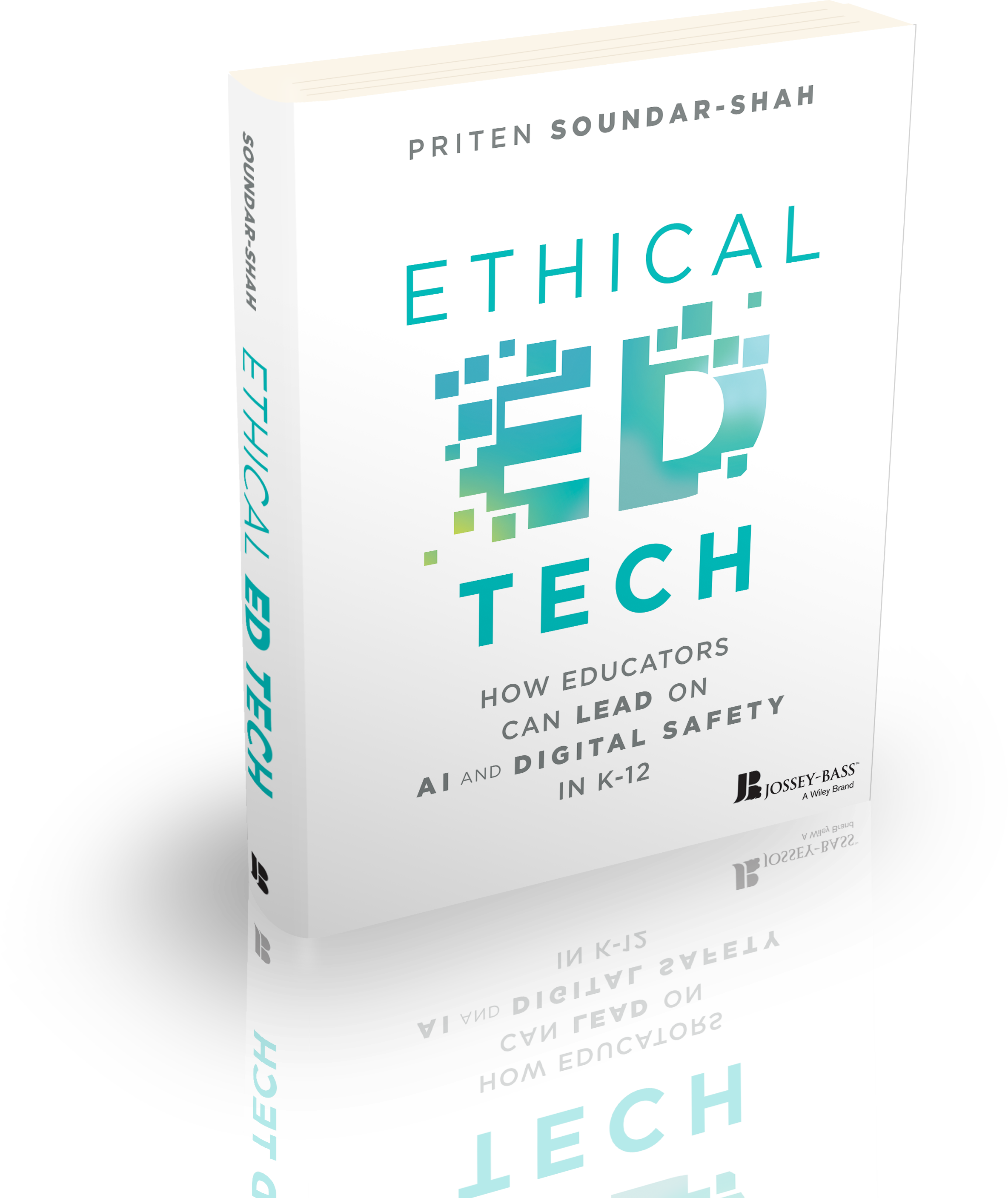
- AI & The Future of Education: Teaching in the Age of Artificial Intelligence
Transcript
Hey everybody, this is Dr. Craig and AI, and I'm here with Priten Shah, who is the author of AI and the Future of Education. Great to have you here.
Priten: Thank you for having me.
Hey, look, why don't you tell us about your past and how you came to be really interested in AI?
Priten: Yeah, the story had a lot of different notes, and so I'll try to keep it continuous. I first got my hands in edtech as a high schooler. I had started a nonprofit that built online tutoring platforms way before they were everywhere, in Diamond Design, and we tried to focus on providing peer-to-peer tutoring for high schoolers. That interest kind of built on itself across my high school experience, my college experience, and then my masters. I worked on multiple different projects, both my own and with partners, doing everything from helping schools transition to online platforms to building custom ones during the pandemic, building master learning reasoning courses, working on civics education and how technology might make that more accessible.
Throughout that time I was kind of exploring education from all these different angles. I got to teach English as a second language in Korea for a little bit, I was a teacher's assistant in a special education classroom, I taught at a private school in Boston — just all sorts of different aspects of education — while I learned about the philosophy of education and thought about computer science in an academic setting. All that sort of set me up for the kind of thinking that I need to do right now to navigate the age of AI.
When I initially learned about AI it was in the context of Sanskrit in college. I was thinking about natural language processing, and they were trying to figure out — because Sanskrit is such a codified language — it's much easier to use some of the natural language processing to actually go through and figure out how to process older text in it. That was the first time I really dabbled in AI, but that was way before any of it became really popular.
Then when the ChatGPT API came out and everybody started using it, that's when we started to hear a lot of feedback from folks about — oh, you're a go-to person for education and technology, is there anything you have to offer us on this? At that time I was sitting there really excited, figuring out what tools I could build with this, what kinds of problems I'd been trying to solve in edtech that now I could suddenly solve overnight because of this new technology. And the audience was all like, no, no, no, no — this is a bad thing. Can you help us figure out how to prevent our students from using it, or can you help us figure out what bans we need to put in place, or how we should structure our firewall? That's when I first realized, okay, I need to spend a lot more time in this space helping folks navigate this era, because there are a lot of misconceptions — I think, understandably.
What are some of the ethics that you talk about in your book that educators need to be aware of in using generative AI?
Priten: Yeah, I think that myself, the book, my company — we all take a pretty grounded stance on AI. We're believers that there's real potential for it to change some of the ways we do things, and so we should be excited about the technology, we should try to figure out how we can use it to cut down on the kind of stuff that none of us want to do. But there are real ethical dilemmas and ethical questions that we need to solve and figure out.
We talk about everything from the basics — which is figuring out what it means for content to be made by somebody, so when you're helping a student figure out what is generated by AI and unethical and cheating versus when are you using AI to help you productively — I mean, that's a question that I think most teachers are trying to grapple with on a daily basis.
But there are larger questions. There are questions about the bias in these algorithms and what that means for what we're exposing our students to, what kind of content they're producing and replicating. There are questions about the environmental impact of AI algorithms and how much we want to continue to use them when they're having a disastrous effect on our climate — or adding to the disastrous effect on our climate. And there are questions about what this means long term for larger society.
This is the philosopher in me that comes out a little bit, because AI is a great test case for a lot of our theories about what a good society is and what the role of our economy is and what the role of each individual person is — but also what the role of education is. There are really important questions to ask about, like, once there are fewer jobs out there, what kinds of jobs are going to remain? What are we doing with folks who become unemployed? How are we retraining folks and reskilling them to take on new jobs, if it's creating new jobs? We could talk about any of these things for an entire 20 minutes.
And then there are also just questions in education about access — who are we training to use AI, what access do they need to the internet and to devices in order to make the most of AI? Those are all kinds of questions that I think we try to explore, and kind of hope that we end on the right side of as we continue to grow.
What are some of those opportunities that you see for teachers, just at a really entry level, who are testing the waters with AI — what could they be doing?
Priten: Yeah, when we're talking to folks, my go-to thing with them is that they should figure out how to use it in their own time. I think teachers feel much more comfortable when they're navigating this in, you know, a prep period — figuring out how to make a lesson plan work, or a worksheet, or come up with a new creative assignment for their students. Maybe they're always assigning the same one and the students aren't really excited about it, and so they want a new assessment method. Using any of these AI tools as a brainstorming buddy is a great example of trying to get yourself out of the box a little bit.
Those are the kinds of places we ask teachers to start — what do you do when you're not with your students that you wish you didn't have to do? Whether it be coming up with 20 multiple choice questions, whether it be rewriting a New York Times article to be more accessible to your grade level students, whether it be coming up with brand new rubrics so that you can assign a more creative project — those are the kinds of things that we find teachers enjoy the most, because it's the least stressful way to use AI, since they're not exposing students directly to the actual AI technology yet.
Yeah, I encourage schools to focus on raising the capacity of teachers, giving them time and resourcing to experiment with AI and to see how they can be more efficient, more effective, and more creative with differentiation and neurodiverse students.
When we move to students being able to easily and quickly access AI in an educational context, where are the opportunities you see for students to directly use it to increase their learning?
Priten: Yeah, student usage is interesting because I think we have to solve a lot of those ethical questions before we can fully embrace it. But I'm hoping that we get to a point where we're at least able to safeguard these tools for students, help them learn what right usage and wrong usage is. And when we get there, I think there are really powerful ways that an individual student could use them.
Everything from uploading something you're reading and asking it to quiz you on it, and kind of forcing you to do that recall that we all know is really important for education. Serving as a check on your own thinking — put in your thesis and say, what might some strong counter arguments against this be, and not necessarily come up with the strawman version of the counter argument, which I think a lot of our younger students are definitely drawn to do, if not even all of us. Using it like — okay, here's my argumentative essay, can you help me figure out where the logic is a little bit lacking, what points am I forgetting that somebody else might make in response — really helping the student use this as a way to check their thinking, and hopefully that will challenge them to think more critically about whatever their own ideas are.
I'm definitely much more hopeful that we use it to augment our students' ability to think for themselves. These are some ways that I think kind of help them see, okay, I still have to do the thinking, and this just helps me think more clearly, or think better. That's where I think the potential for the technology is the strongest.
Yeah, great. And you're also the CEO of Pedagog.Cloud — tell us about that.
Priten: Yeah, so...
Cloud is kind of the umbrella project through which we do all of our work with different institutions, teachers directly, anyone with students. We use basically all forms of technology to kind of provide custom solutions to students and teachers. A lot of our projects in AI right now are kind of trying to provide teachers a one-stop shop for all sorts of different resources they might need. We have everything from online accredited graduate courses to a crash course, a train-the-trainer course. We do bi-weekly webinars on a very particular topic — so I think next week we have one on like AI-proof summer assignments. Another one this month is just for STEM educators. We have a database of lesson plans that kind of help teachers brainstorm how might they integrate AI into their classroom, or how might they talk about AI with their students. There are examples for a history teacher who wants to figure out how they might have students do a DBQ using AI to help. We provide in-person workshops, we do online workshops for folks live, and then there's the book, which is also through the company.
That kind of serves as a starting guide for folks who kind of want — who have no idea what AI might be and kind of want it contextualized just enough for education. You don't necessarily need to sit down and learn all the basics of AI if you're a teacher, but you want to know enough to make sense of the technology, to use it well, and also to be safe and keep your students safe. That's kind of where the book gives you exactly the right information to navigate that part of the territory, but also gives you lots of practical advice — here's some screenshots of what it looks like when you generate a lesson plan, here's a prompt idea for how you might use inquiry-based learning or project-based learning. It kind of walks teachers through some practical usage as well, while raising those ethical questions that we started with.
**Host:** If we were to step out three years from today and the uptake of AI and the development of educational platforms continues, what do you see things looking like in a classroom?
**Guest:** What do I see things looking like, or what do I want things to look like?
**Host:** What do you want?
**Guest:** Okay, all right. There's a pessimist in me and there's the optimist that I think is dreaming of a particular scenario. I'm hoping that all of the tech stays outside the classroom — and this is probably my most contentious take — but I hope that our time inside our classrooms is still spent with students engaging with each other, with students engaging with the teacher directly. I'm hoping that all the AI technologies that are being built are used outside of the classroom: for extra preparation for the students, so that they come to class prepared to review material that they're being assigned; for teachers to use it to kind of provide themselves some work that they needed before they can show up to class, prepared to lead a Socratic dialogue or lead a skit scenario or something like that, where all the students are actively engaged in the classroom. And everybody's using AI in their own time, when they're not supposed to be with humans, to kind of prepare for that time with humans.
**Host:** Great. So personalized learning for every student, but on their own time, so that the human learning is still taking place in the classroom. What's the best way for someone to get hold of your book?
**Guest:** It's everywhere. You can check out Amazon, Barnes & Noble, any of your local indie bookshops. There are audiobook versions on any of the major audiobook providers, as well as all the ebook providers — Kindle, Google, Nook, Scribd even. I think if you search in your go-to place for books, it ought to be there.
**Host:** And if someone wants to engage with you directly, what's the best way for them to connect with you?
**Guest:** Our Instagram is super active — we post daily, if not every other day, with our latest events, prompt tips for teachers, news and events that are relevant to educators about AI. And all those messages, eventually I do take a look at. So if anybody has a particular question or concern, sending a message over to our Instagram, which is Pedagogic Cloud, is probably the best way to get in touch with me or my team.
**Host:** Thank you so much for your time.
Related conversations

Podcast
Role of AI in the Future of Education
EdInsights
Podcast
The Role of AI in the Future of Education with Priten Shah (EP155)
Rethinking Learning Podcast
Podcast
AI in the Future of Education with Priten Shah
EduMagic New Teacher Podcast
Podcast
The Promise and Dangers of AI in Education
All of the Above