Podcast Appearances
The Promise and Dangers of AI in Education
All of the Above
May 2024
Related Projects
- AI & The Future of Education: Teaching in the Age of Artificial Intelligence
Transcript
Because those folks with resources are going to still pay for another human. And if we start to say, "Oh, this can replace your tutors and this can replace your teachers," that's only going to happen in underresourced areas. And so we have to be really clear and really adamant that no, those students in fact need a human teacher the most.
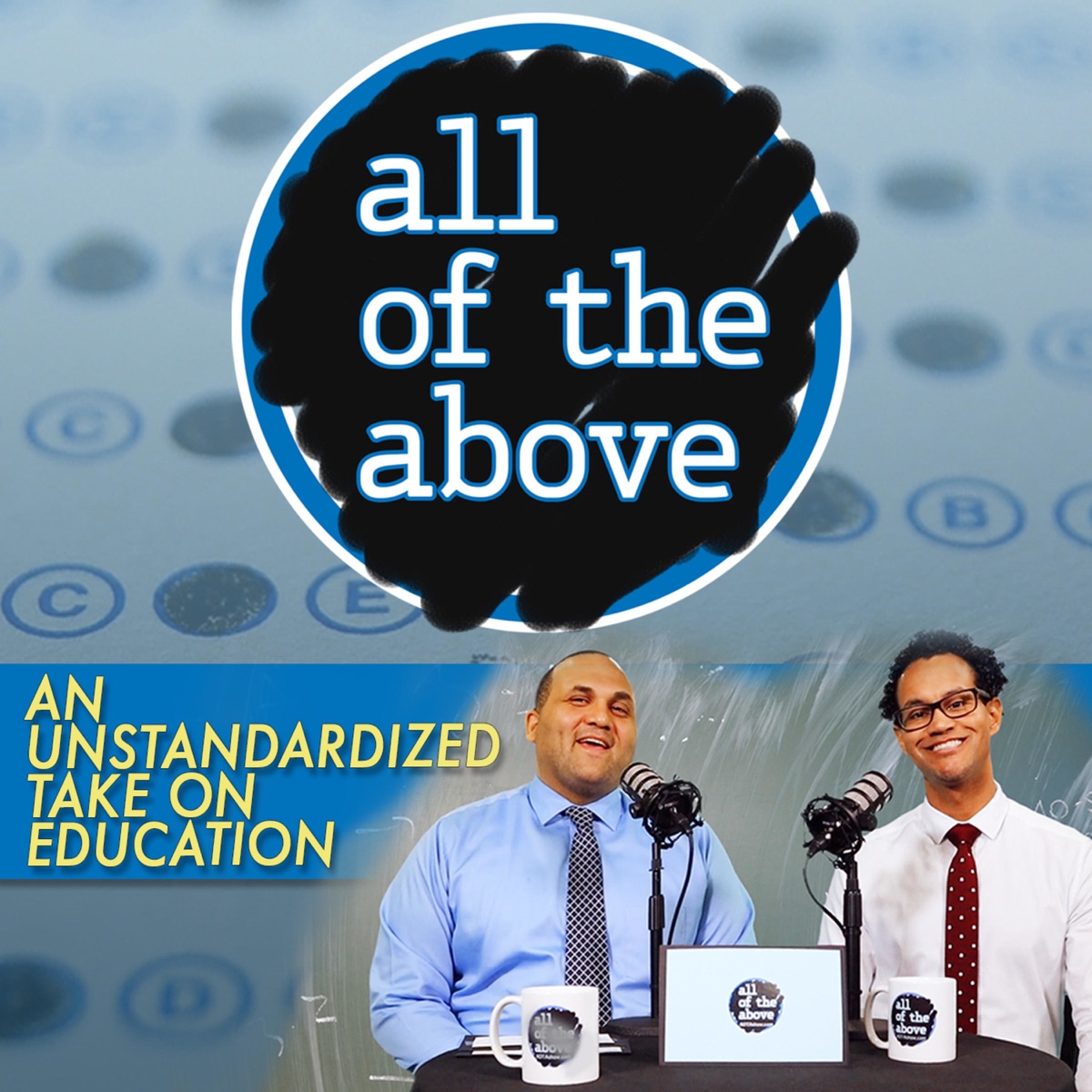
Welcome, ladies and gentlemen, boys and girls, guys, gals, and nonbinary pals, to another episode of All the Above — the show that gives you an unstandardized take on education. I'm Jeffrey Garrett, one of your co-hosts. I've been a middle and high school principal and a high school social studies teacher. And as always, I'm joined by —
What up, family! It's Manuel Rustin, your favorite teacher's favorite teacher. I'm a high school history teacher here in the Los Angeles area. This is year 20 in the classroom for me, wrapping up right now.
And this here, of course, is All the Above — your home for news and analysis of all matters pertaining to our wild world of education. Shout out to anybody who might be joining us for the very first time. If you are catching us on YouTube, shout out to you — hopefully you hit that subscribe button and thumbs up and all that good stuff. But also find us on your favorite podcast streaming app, because in between our full episodes, which feature super dope guests and of course these lovely graphics, we also have Passing Period Podcast, which is just Jeff and myself talking about the latest happenings in the world of education. And if you are listening to us right now on the go, shout out to you — definitely give us that five-star review, or whatever your podcast streaming app might provide.
Jeff, man, if this comes out when I anticipate it coming out, that means it's the fourth right now. So Jeff, I want to say — May the Fourth be with you. How you doing, man?
Oh man, I am doing okay, hanging in there. And May the Fourth be with you as well. I will talk about — well, let me first acknowledge the fact that you've had this book come out. You've got this new book called AI and the Future of Education: Teaching in the Age of Artificial Intelligence. I want to get your take on this — I haven't read it yet but I'm definitely interested. Let me ask you: have you been asked to come into schools as an AI consultant, or something of that nature?
Well, I have, yeah. It's been really interesting. In the last couple of months I've been doing everything from speaking at parent nights and PD days to working with individual schools on implementing specific AI tools and integrating them in their classrooms. I'm also consulting with higher ed and corporate spaces on how they're using AI and education — to, you know, strategically look at how the technologies should be implemented.
So far what I've been finding has been really interesting. Right now I'm at a school in the process of developing a curriculum for AI, and that's really cool because we're trying to figure out what the students should be learning in terms of what AI is, the history of AI. That's pretty cool. There are a lot of schools that are worried about academic integrity, and they want to know what the best practices are, how they can integrate some tools while also being able to see whether a student is engaging with the technology appropriately or not. I've also been finding that there are schools that are just looking to improve student learning and engagement, and so they're seeing this as an opportunity — and that's probably the most exciting bucket for me.
I'm seeing all sorts of different concerns and motivations for schools reaching out. But I think ultimately what it comes down to is the question of what does it mean for learning to happen when we have these new tools available. And I don't think we've solved that yet, and I don't think we will solve it overnight. So that's probably where I'm most interested.
How are the parent groups and administrators responding to what you're saying? I'm curious — are they feeling relief, or are they still sort of kind of fearful of what might be happening here?
I think both. There's definitely a lot of fear, and I think a lot of that fear is warranted, because there are real dilemmas, there are real concerns that schools don't have all the answers for. I think one of the main concerns is this idea of AI being used for plagiarism and cheating. What I try to do is acknowledge those concerns, validate them, but then kind of push folks toward thinking about why our students are so motivated to cheat in the first place — and then what might be a different way to think about assessment and learning. So I try to kind of push folks out of the detection and prevention mode into more of a reflective thinking mode.
I think there's a lot of relief and excitement when folks really start to understand the use cases, the possibilities, and how they might use AI in their own lives. Just as I mentioned sort of giving teachers opportunities to use it in their own workflow, I think giving administrators an opportunity to think about how it might improve their day-to-day operations is really powerful. Once folks kind of see the potential and they understand both the benefits and the risks that come with it, I think they're able to move forward in a more thoughtful way.
I've been really pleased with the majority of the engagements that I've had. At the end of the day, administrators and parents definitely want to get this right, so they're approaching things with maybe more caution than some of the edtech companies would like — but I think that caution is warranted and probably a good thing.
I know there are definitely schools who are putting up AI detection tools, and I would almost argue that's not the right path forward. In order for schools to move forward, they need to think about what the right mix is of putting guardrails in place while also being intentional about the ways in which they're integrating the technology. I just don't think detection is the answer. What I try to do is provide a voice that says, hey, this is something that we need to be thoughtful about, but we also shouldn't shy away from it.
So for folks who are listening to this and they're working with edtech, they're designing software for schools — what's your advice for the edtech industry?
I think for edtech companies, the first thing is to be careful with how you're talking about the capabilities of the technology, because right now there's a lot of hype. I don't think you want students to be over-relying on technology instead of learning the core skills. So you need to be clear about the benefits, the limitations, and the risks that come with your product.
The second thing is I think you need to think about how your product is going to interact with the broader system that is education. We know that a lot of the issues with education are systemic, and so if you're trying to solve one small part of the problem without thinking about the way it's going to interact with the rest of the system, it might not have the outcome that you're hoping for.
And then the third thing is I think you need to involve educators and students in the design process, because right now there are a lot of products being created by folks who don't necessarily have deep experience in education. You need to involve folks who understand pedagogy, who understand the constraints of a classroom — they're the ones who can tell you whether your product is actually going to work in the real world. You need to have them in the room thinking about the design and the iterations of the product.
And then I would say one more thing: I think you need to think about equity and access. There's a real possibility that AI is going to exacerbate the digital divide that already exists in our educational system. You need to think about how you're going to serve folks who might not have access to the most cutting-edge technology, and also think about providing solutions that work for underresourced schools — because those folks with resources are going to still pay for another human. And if we start to say, "Oh, this can replace your tutors and this can replace your teachers," that's only going to happen in underresourced areas. And so we have to be really clear and really adamant that no, those students in fact need a human teacher the most.
So I think that's probably the biggest thing to keep in mind when you're building edtech products.
So one more quick thing before we move into the book — are there any trends that you're seeing right now, whether in schools or just broadly, that are interesting to you or concerning to you?
Yeah. One trend that's really interesting to me is this shift in the whole approach that folks are taking to understanding AI. I've been seeing a shift from just, you know, "ChatGPT — how do I use this tool?" to "Okay, I'm going to sit down and understand what AI is and how it works at a deeper level." I think that's really interesting, because folks are realizing that there are limitations, there are risks, and unless you understand the technology you're kind of shooting in the dark. I think that's a really positive sign.
Another trend that I'm seeing is the push toward understanding AI literacy and how we should be teaching AI to students. I think that's really positive, because I think we can start to address some of the misconceptions and the fears about the technology by giving students the tools to understand what is going on under the hood. So I think that's a really positive trend.
And then there's definitely some concerning —
One trend is the rush to integrate AI into classrooms without sort of thinking about how it's going to affect students and what the long-term implications are. I think we need to slow down a little bit and be thoughtful about how we're integrating this into our schools.
And then there's also just this idea of this generational divide. I think there's definitely parents and administrators who don't necessarily have the same relationship with technology that younger folks do, and so I think that's something that's worth keeping in mind as we move forward. I think that's something that's worth really trying to bridge — that divide — and having conversations across generations about what this technology means and how we can utilize it effectively. So those are some of the trends that I'm seeing.
So now let's talk about the book. Just a quick overview — what was it about, and who was it written for, and what are some of the key takeaways?
So the book is called AI and the Future of Education: Teaching in the Age of Artificial Intelligence, and it's meant to be a practical guide for educators. It's meant to be a good starting point for folks who are not necessarily super tech savvy.
The book covers things like what is AI, how do we define it. There's a whole section on understanding the technology — how the models are trained and what data they're using, et cetera. There's a whole section that talks about the ethics and the considerations that we need to keep in mind, so things like bias and privacy and the environmental impacts, et cetera. And then there's a whole practical section that talks about how educators might use AI in their classrooms or in their own workflow — so things like lesson planning, content generation, and managing student data. And then the book ends with some big questions about what the future might hold and what that might mean for our education system.
So what's one really striking statistic, or maybe some insight that really stood out to you, or that you think might be striking to our listeners?
I think the biggest thing is that we don't have a clear definition of what constitutes cheating in the age of AI. There are all these grey areas, and I think that's something that we need to think deeply about. I think one of the things that I talk about in the book is that we need to be really thoughtful about how we define things like originality and creativity in the age of AI. I think that's a really important kind of starting point for that conversation. So I think that's probably the biggest thing.
So let's talk about what are some of the specific use cases that educators can utilize, and how they might use them.
One thing that I talk about is lesson planning. A lot of educators might spend like a couple of hours writing a lesson plan, and now they can use AI to help them brainstorm ideas or maybe get a draft lesson plan that they can then iterate on. I think that saves a lot of time and also gives educators more mental space and time to think about the creative parts of teaching. So I think that's a good use case.
The second is content generation — generating worksheets or maybe some alternative assessment options. If you have a worksheet that has 10 multiple choice questions, maybe you can ask AI to generate 10 more multiple choice questions on the same topic, and then you can edit them and integrate them into your assessments. I think that's a really practical application.
And then the third one that I think is really powerful is reflection and feedback. Educators can use AI as a sounding board to help them reflect on their practice. Maybe they had a lesson that didn't go well and they want to understand why and what they might do differently, and AI can help them think through that. I think that's a really powerful tool for professional development.
So what are some of the risks or challenges that educators might face as they start to integrate AI in their classrooms?
I think one of the biggest risks is a false sense of security. There are AI detection tools that are being promoted as the solution to the plagiarism problem, and I think those tools are really unreliable. I think they give educators a false sense of security, and so I think the biggest risk is that educators over-rely on these tools and then end up accusing students of cheating when they didn't actually cheat. I think that's a real risk.
And then the second thing is the environmental impact of AI models. Every time you use a language model there's an environmental cost associated with that, and so I think we need to be mindful of that and maybe not every single assignment needs to involve engaging with AI tools.
And then the third thing is just thinking about equity and access. If some students have access to AI tools and some students don't, then you're potentially creating a divide in your classroom. I think educators need to think carefully about how they're integrating these tools to make sure that they're not creating a divide in the classroom.
So now let me ask you about the book itself. The title is AI and the Future of Education, and so you're talking about this future — what does that future look like years from now, five years from now, ten years from now?
I think in the next few years we're going to see some fundamental changes in the way that we're assessing students. As AI continues to get better and better at generating text and images et cetera, we're gonna have to kind of rethink how we're assessing and evaluating student learning. I think we're going to see a move away from like single essays and towards more dynamic assessments that maybe involve presenting or discussion or projects. I think that's probably the biggest change.
And then longer term, I think we're going to see a shift in the way that we're thinking about the role of a teacher. I don't think AI is going to replace teachers, but I think it is going to change the nature of the work that teachers do, and so I think we're going to see —
More of a focus on mentorship and community building, and maybe less focus on information delivery. I think that's kind of a shift that's going to happen.
And then longer term, I think we're going to have to kind of grapple with some really big societal questions. Things like, what is the role of education in an age where AI is capable of doing a lot of the things that we currently teach students to do? I think that's kind of a bigger question that we're going to have to grapple with as a society.
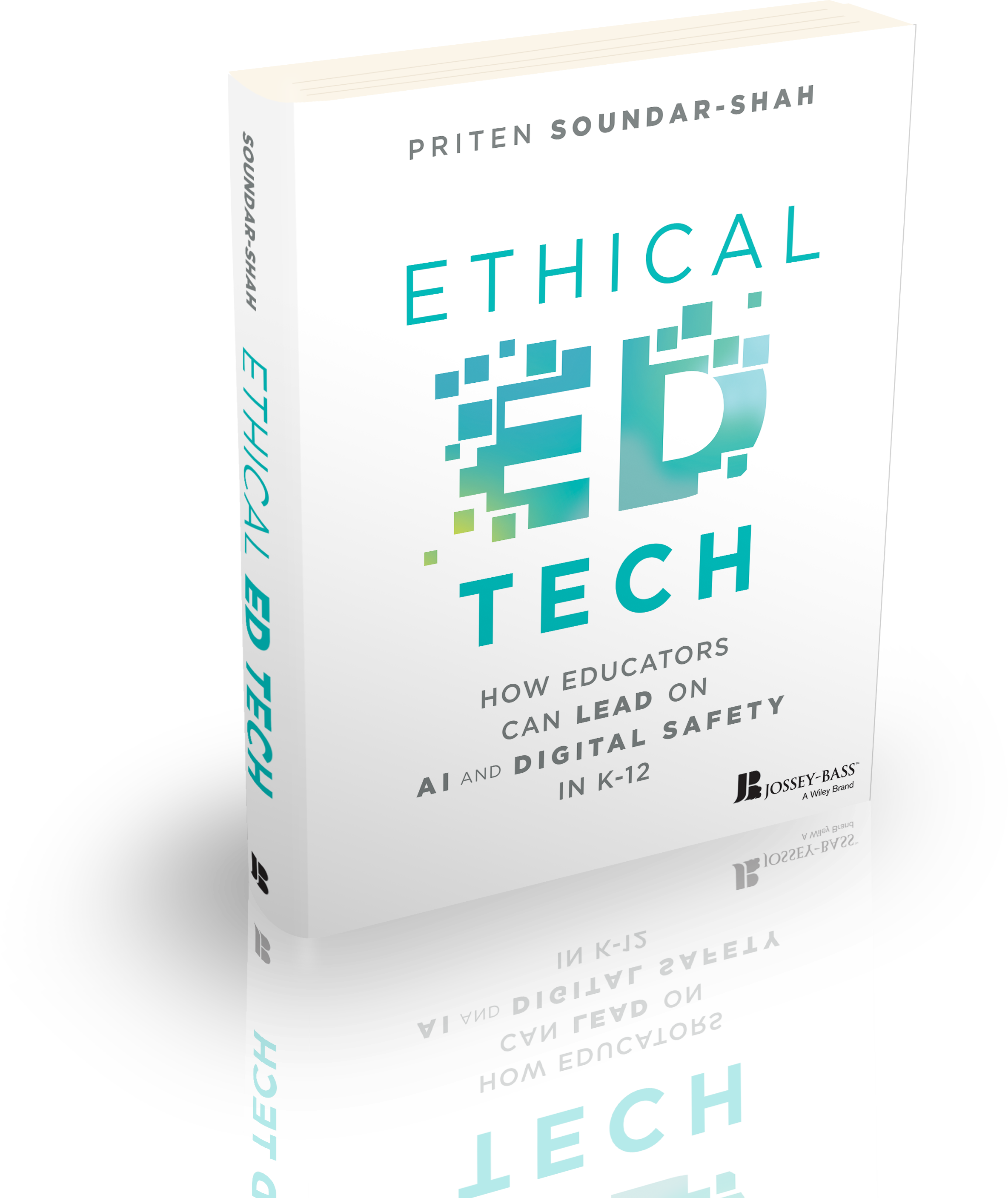
So for folks who are listening and they want to read the book, how can they find it? The book is available on Amazon, Barnes and Noble, and all your favorite book retailers. It's called AI and the Future of Education, and if you just search for that you should be able to find it. And the author — Priten — so if you have a place in your podcast feed or something where you could put a link, that would be great.
And so folks can connect with you — you mentioned that you're a consultant and you work with different schools, so how might folks who are listening try to connect with you and figure out how you might be able to help them?
So I have a website that's py.cloud, and you can find all of my contact information there. And if you're interested in consulting or speaking engagements or collaboration on any of these ideas, you can definitely reach out there. And my Twitter handle is @puncloud, and Instagram is @pedagogiccloud, so you can connect with me on any of those platforms as well. I'm always happy to connect and chat about these ideas.
So Priten, thank you so much for your time and for this conversation today. I think it's a really important conversation for educators to be having right now, and I really appreciate your perspective and your thoughtfulness on this topic. Thank you so much.
Great to be here. Thanks, Jeff and Manuel, for having me on the show. And thanks to all you folks listening out there in podcast land and on YouTube. If you enjoyed this episode, don't forget to like, share, and subscribe, and pass it along to your friends or your colleagues who might be interested in this topic. And you can find all of the links to everything we discussed today in the show notes. So thanks so much for inviting me on the show — I really enjoyed this conversation. I'm looking forward to seeing how educators respond to all of these ideas and thoughts, and I'm excited about the future of education as we integrate AI thoughtfully into our schools and classrooms. So thanks again for having me on the show.
Thanks so much for listening to All of the Above Podcast. If you have any thoughts or questions, or you want to share some feedback, visit our website at www.alloftheabovepod.com, or you can find us on any of your favorite social media platforms. Thanks again for listening, and we'll see you next time.