Podcast Appearances
On Transforming Learning
EdTech Startup Show · Scott Schuette
February 13, 2024
Related Projects
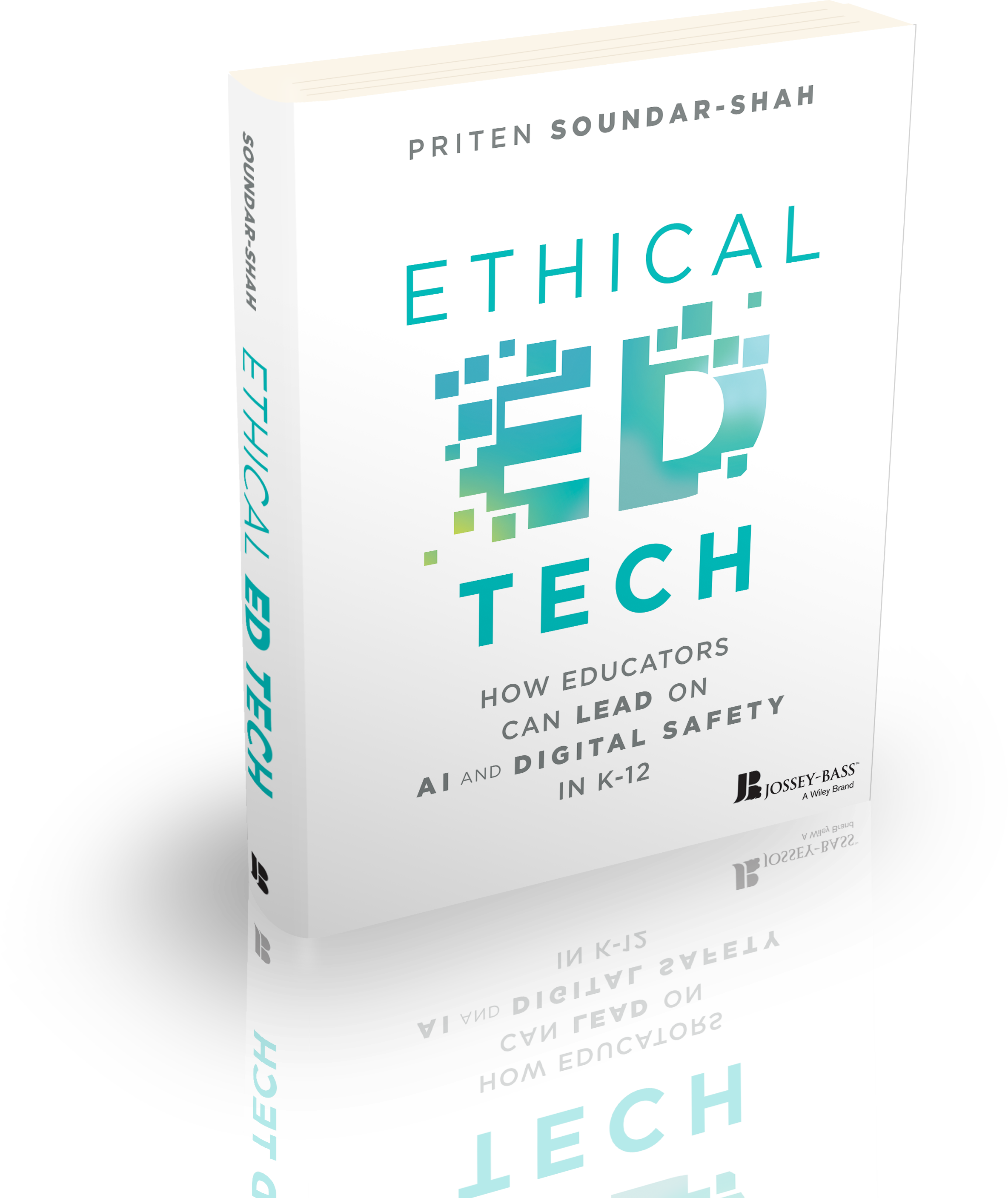
- AI & The Future of Education: Teaching in the Age of Artificial Intelligence
Transcript
Priten: You're listening to the EdTech Startup Showcase, an original series produced by the BE Podcast Network.
Scott Schuette: Hey everyone, and thanks for joining us. My name is Scott Schuette, co-host of the Fabulous Learning Nerds, and your host for today. I'll be taking you through the stories of some of the wonderful emerging companies in EdTech. In this episode, we're going to hear all about Pedagog.ai. We'll find out how they got started, their vision for transforming teaching and learning, and the way they're currently supporting educators just like yourself.
My guest today is Priten Shah, founder and CEO of Pedagog.ai. Priten is a visionary education entrepreneur and Harvard alumni, leading United for Social Change and Pedagog.ai, blending extensive teaching experience with technology. Priten's dedicated to innovating learning and integrating artificial intelligence to prepare our students for the future. Priten, welcome to the show, my friend.
Priten Shah: Thank you for having me.
Scott Schuette: Yeah, not a problem. Listen, we gave a quick little overview for you, but I know our audience is hungry for more. Could you give a nice little overview of where you're from, how you got started, and how you got to where you're at with this amazing company you've built?
Priten Shah: Yeah, I have a very weird pathway through education and education technology. My first venture was in high school, and so as a sophomore in high school, we were doing peer-to-peer tutoring as a nonprofit that I had founded to provide — there was an under-resourced neighborhood nearby. And then we started thinking about which ways we could use technology to make all of this more accessible and grow our impact, and that was the first time that I picked up a coding book, tried to figure out how to build a website and build a two-way platform. Back when this was not a dime a dozen, that was the first time I actually started to think about how technology can make change in education and kind of help us solve some of the perennial problems in education.
And then that's like progress as the different crises have emerged in education. For example, U4SC was born a lot out of the discourse — effective public discourse and the effect of civics education. I was a freshman in college at that point, and I started thinking about the fact that there were really cool things I was learning about how to be a good citizen in the world, at Harvard. But that was not accessible, and the price tag on that, the elitism, the restrictiveness around it, meant that things that I think everybody should be learning at earlier ages was being taught only in very restrictive environments. And so that was the second project that kind of helped me start thinking about how can we make civics education more accessible using technology. And that's kind of how we've been thinking about U4SC.
And then we started working with folks to do really cool, innovative things. We started thinking about what are ways we can better serve our students, how do we use mastery learning in platforms, and we built custom mastery learning solutions for folks. During COVID-19, we spent those years helping fields figure out how to run academic extracurriculars online, innovate online, make them more exciting, and not just sitting in a Zoom box. And we were also helping schools transition to Zoom. So we kind of did a whole range of things with that crisis.
And then with the AI stuff coming out, these were conversations that were really like armchair conversations for me before 2023. We were talking about, oh, like this is the North Star for when this technology becomes more accessible — we can do this for students, we can do this for students on this platform, like this would be really cool to do. And then we started seeing that all of them became possible really quickly once this technology became more accessible. And we started working on it, and that's when we were like, folks weren't really matching our energy for it. We were getting a lot of folks who were much more scared off by people talking about the plagiarism angle, the cheating angle. And no one was as excited as me about all the cool things we can do with technology. And that's really where a lot of the current projects have borne out of — getting folks to, A, deal with the crises that it has created, because that is a real problem, the problems that AI has created. But also start to see the potential for where we can be as an education system.
Scott Schuette: Excellent, awesome. So help me understand the opportunity as you see it today and how your organization is kind of meeting learners and educators in that space to solve for it.
Priten Shah: Yeah, this is one where I think we still have a pretty hard time as a country getting folks to build out the digital literacy that I think is needed in order to fully embrace what the potential of the AI technology is and deal with the challenges it's creating. Unfortunately, my go-to example for this is during the pandemic — we spent a lot of time building really cool things, but the bulk of my time was spent helping folks train teachers how to mute and unmute their microphones on Zoom. That was just the reality of where tech literacy was across the country. And folks were still learning how to use Google Docs for the first time, and Google Classroom for the first time. There was basic tech literacy that we were building out while we were also doing some really cool innovative things and starting to think about what can we do with technology.
And these days it's similar. There's lots of time I spend inside schools working with individual teachers, showing them the difference between a Google search box and making a ChatGPT account and putting in a simple prompt. And then we're building really cool tools that I think will hopefully be the kinds of things that will make education much more interesting and engaging. And so we're trying to handle it from both angles — getting people caught up to where technology is and also trying to keep innovating and start to see where we can be.
Scott Schuette: Yeah, the pandemic was a pretty big wake-up call for all of us, right? All of a sudden — whoa — how I used to do things, I can't do them the way I used to, and now I'm forced to do them a different way, and we all really struggled through that. So it's really essential that Pedagog.ai is around for folks to help them hone in their skills and really try to think forward.
What's some of the things that I've been noticing in the series is there's a real need for us to change our paradigm, right? The paradigms that used to work for us are not necessarily valid or relevant anymore. And that's where EdTech startups like yourself become crucial for us to move forward. But without that — I shouldn't say the safety net, but the comfort, so to speak — to be open to change and open to shifting your paradigm, sometimes radically shifting our paradigms from a learning perspective becomes really, really problematic.
Help me understand — your primary product is Pedagog.ai, correct? Could you explain to our audience what that's about and what advantages it brings to what they do?
Priten Shah: Yeah, so Pedagog.ai was born out of trying to be a one-stop shop for folks for all elements after getting caught up with AI in education. And so we have everything from an online accredited three-credit graduate course in AI in education to a crash course for someone who is just like, what — I just was ignoring all of this, but clearly it's not going away. We do in-person PD. And then we built cool tech solutions. And so we have a suite of text tools in our library where teachers who don't want to really figure out their prompts and just want to start seeing what exactly AI can do can use it — more of a drag-and-drop type situation. Put in some answers to questions and it gets you some lesson plans, worksheets, Bloom's taxonomy, scaffolding. I think we've got an essay prompt generator today. So all kinds of little tools our teachers can start to see — like, what is AI even capable of doing — without spending a lot of time learning what is ChatGPT, what is Claude, all that kind of stuff.
We're also working on solutions for teachers to use in their classrooms. We are starting to see more teachers who have taken our courses, read the books that we've put out, gotten the background knowledge about where the technology is, and now want to think about the next level of tech. And that's really where I'd like to be. And a lot of the other work we're doing is just trying to — the word is get caught up and get everybody caught up in the conversations necessary for us to embrace that technology. While we're primarily an EdTech company, we spend a lot more time doing the teaching, the education, and the thought leadership in the area. Because that's, I think, necessary in order for that tech to actually have true value in the space.
And then we're working on the tools, right? So the SOCRAT tool, for example — teachers can kind of assign custom chatbots for their students, and they can see a transcript of the conversation. It's a much more safeguarded, limited environment for the teacher to have students use AI in their classrooms, and it kind of solves some of the initial pain points we were hearing. Folks were like, oh, we don't want the students to talk about anything — we want to see what they talk about — but still use their creativity. So it's not like they're pre-fixed assignments that a teacher puts out. They're really like — you can kind of fill out a form and assign us to create a dialogue about anything you're teaching in the classroom, or have the student use it as a study guide for use in the classroom. So we're trying to blend teacher creativity with the tech in these spaces and not try to provide really rigid solutions — it kind of allows for that symbiotic innovation between both the teachers and the technology.
Scott Schuette: So it sounds to me like you've got a solution not just for people who might be, dare I say, completely lost — which is fine, right? Especially in today's environment. Like, I don't know where to go, I'm going to go to Pedagog.ai and we're going to get started, and I'm going to learn about this stuff because I need to learn about this stuff in order to meet the demands of the workspace today or our education today. And also those people that — man, what is possible, right? So I know a little bit about, or more than dangerous about, where technology is, but I really need some tools — really a great place to get some tools as well. Is that correct?
Priten Shah: Yeah, that's right. And for those folks, we also offer — we're working on lesson plans. So we put out regularly, weekly, lesson plans for different creative ways that they can integrate AI into their classrooms — everything from using our tools and not using our tools.
Priten: But we're just like, how would you use AI to teach outlining an essay? How would you use AI to have a conversation about George Washington, or maybe teach students and make it engaging? And so those are for the folks who are pro-AI, gotten all that baseline knowledge, are starting to embrace it. But I just want to start thinking about what are all the various ways that we can start innovating on the things that we already need to do in education, right? Like, there's larger conversations we can have about what kinds of systematic and paradigm shifts we need in our educational systems, but those aren't coming in an instant. In the meantime, we need to start thinking about how do we build on what we're already doing? How do we meet the standards that we already have to meet? How do we get students prepared for the tests that aren't going to disappear overnight? But using the new technology that we can kind of use, while still talking about why we should get rid of the tests and innovate beyond that in the long term.
That sounds great. Do you have any favorites? Not to give away all of your intellectual property, but are there a couple of them that — this is so cool and I'm glad I thought about this — you want to share with folks?
Scott Schuette: Yeah, so this one is actually not out yet. It will be at the end of the month, but SOCRAT is going to be able to customize a custom set of questions for different students' interests. Basically, if there's math problems or math work problems, a student can kind of go in and have a profile with, oh, like, I'm interested in Disney, baseball, and ninjas, and the math problems are customized to those particular context areas. And that's a tool we're really excited about, because that really starts to show how we can still achieve shared curricular goals but start to make them more engaging and fun for students. And that's where we sort of really think — what is the next level of integrating these things beyond just chatting as a chatbot? There's so much more we can do, and we're pretty excited about getting that out.
Priten: That sounds wonderful. That's great. So talk to me a little bit about your vision, right? You're doing a lot of really great stuff, but where do we take pedagogy? Where does it go?
Scott Schuette: We're starting with a lot of catch-up work where we're trying to reach the school districts who haven't spent the years thinking about all the different education technology solutions that have come out, and are finding themselves a little bit more flustered because they have to — there's a little bit less of a choice than there was a few years ago. And this is where I think, even during COVID, some of these school districts got away with not building that digital literacy because there was an end in sight. We didn't know when, but we all kind of knew that this was like — we didn't need to completely revamp education forever. And so a lot of these districts spent some years putting these band-aid solutions, which we were a part of, and we thought that was the right way to get things quickly, appropriately fixed for students. But now we need to actually spend the time building that digital literacy, building that tech literacy, getting folks to see where the technology is right now, where it can be in a few years, and what that means for everything we're doing, right? There are so many larger applications to this that involve just conversations. And so a huge part of our work is just going out there and talking to folks and getting them convinced that this technology is not going anywhere and that we can do cool things with it.
So that's, you know, our next five-year plan is probably to reach as many school districts as possible and start these conversations about what do your teachers need to know in order to actually make use of this technology, know what the students are doing at home with the technology, and also what can you be doing to solve the problems that you've been facing? There are ways we can solve problems that school districts have been trying to figure out solutions for that have become much more easily solvable — student engagement problems, differentiation problems. Those are all problems that AI, the technology that exists today, already makes easier. And this stuff is going to move at a rapid pace. The kinds of problems we'll solve even in six months will be even more exciting and even more longer lasting.
Priten: Yeah, that's really great. Talk to me a little bit about your journey. Where are you at now? Who are you talking to now? And then where do you want to build in the future?
Scott Schuette: Yeah, so right now this is where I think we're having these fun conversations with a lot of folks who have started to think about these things. There are lots of conversations we'll have with admin staff, and they're like, I've been trying to push for mastery-based learning in my school system for years, and now I finally have a robust reason for why it's urgent to use the framework of mastery-based learning, because that might be a better outlook for students in terms of assessment criteria — getting students engaged and feeling motivated to actually do the assignments when everything can be plagiarized, quote unquote. And there's a higher incentive to plagiarize with a grade-based system that's punitive. And so those kinds of conversations are great because they're the kind of conversations that I think can start us thinking about, okay, how do we build tech-based mastery learning solutions that help students do the right amount of practice, get tested multiple different times with whatever ways make sense for them to show their mastery in the topic area, and then build on that.
And so that's where, so many of the technology solutions we do are custom built. We work independently with different nonprofits and smaller schools and we build them solutions that make sense for that. A particular school might have a particular curriculum they already want, and the boilerplate, here's what we already have for everybody, approach works at some large-scale institutions. But we find that lots of smaller schools that are trying to meet the needs of a particular student population like the option to have something custom built. Even with SOCRAT, that's the model we're taking — we're building custom school-built SOCRAT bots where they're like school mascots. It's not SOCRAT, it's the school mascot, and students are talking to and engaging in assignment types that the admin and teachers have collaborated on and thought about together. And that's kind of the vision we're seeing — we can really build custom-tailored solutions for different student populations using this great technology. And a lot of this is going to require really great conversations with folks about where we're headed, what we can do, and why we should even think about doing this at all.
Priten: Yeah, that's really cool. In your journey, I'm sure there have been some learnings. Could you share a couple of those with our audience? Like, I really hoped this would go this way, but it went this way, and here's what I learned, and this is how we're delivering something new and better.
Scott Schuette: Yeah, I mean, the first lesson that is really top of mind right now is the excitement difference between the tech folks and an average teacher. I realized how much of a bubble I was in when I was thinking about the AI stuff, because it wasn't real enough for me — I hadn't had enough conversations with folks on the ground about it. And so I was kind of in my own world for years about all the potential cool things and excitement, looking at the research coming out, thinking about — I had nerded out about learning Sanskrit using large language models in college. It was just fascinating and cool and interesting. And then that realization that not everyone is excited about the same things as you, and that there's fear and other emotions at play that you're not feeling, and then trying to understand those and build solutions that tackle those first. That's definitely been the biggest lesson of the last year, at least.
Even with the book — when I initially conceptualized it, I thought, oh, we can talk about all the different things that our education system needs to do for the future and to meet the needs of AI. And my publisher was like, well, maybe start a little bit further back and just tell people not to be scared of this. She was like, we need to start a little bit with why this stuff is even not going anywhere, what are the basic implications of it, why should we not just shoot for banning it from all of our classrooms? Because that's where a lot of these conversations still are across the country. And so while, yeah, I'd love to sit here and talk to you about what this means for how to conceptualize the purpose of education, what kinds of amazing solutions can we do to help students become better humans long term — we're not there yet as a society. Learning that all that excitement that happened in the armchair isn't really practical, that's been the hardest lesson to learn, I think.
Priten: A little bit of disappointment there. Yeah, I mean, we're human, right? Most of us are allergic to change. There's a way that I run my week — it's the same, and if you throw a curveball at me, not so much. And it's so funny that you say that because I think a lot of us — I'm just like you in many ways. I'm a learning nerd. I love stuff like this. I love new tech. I love to talk about it. But not everybody's there. And I remember distinctly when ChatGPT was first coming out into the public realm, where a lot of people were talking about it last year, and I quickly signed up at OpenAI and I went to my team and I said, check this out — and I wrote a video script which would normally take me, I don't know, an hour, in 30 seconds. And it was pretty good. And they were all like, wow, that's really cool, and then we never talked about it again, because they were so afraid of it. They're like, oh my gosh, this is going to take my job. Well, no, it's not going to take your job, but it can help make your job a little bit easier. And so there are people that dive into the deep end of the pool and are ready to get going. But I think a lot of us really just prefer the — hey, I need to kind of wade in from the shallow end and feel good about that. So I think that's a really great learning, and I'm really glad that you shared that with us. It's super important, right? Getting people all on board and providing that visibility to what could be and how it could be better, I think is a lot more challenging than we think it is. And then again, the gut check for people like us is — this is so cool, can't you see how cool this is? This is so cool. And folks, it really is cool, it really truly is. And that's where I think pedagogy can really, really help you. So I think that's awesome. What motivates you? Thinking about the journey that you're on and where you're going — what gets you motivated each and every day to provide more?
Scott Schuette: Wow.
Scott Schuette: That's a deeper question. I think the crux of my projects is about figuring out how we can get our students to enjoy the learning process. And I think tech is my favorite tool, so I like to describe myself as a philosopher who codes rather than a coder who philosophizes, because I think the crux of it is: how can we build a better society? How can we get students to show up to school and enjoy the learning process intrinsically? How can we all have healthy relationships with the world around us, for each other, whether it be interpersonal, like daily lives, or as societies? And so I think tech is a very useful tool to do some of those things. But the core motivation is — can we figure out ways to make our, make it a bit trappier through the learning process, and make the world a better place.
Priten: I think that's really awesome. Tell us a little bit about your book. You wrote this book — share with our audience a little bit more about it, the process, and what it's about.
Scott Schuette: Yeah, so the book kind of does what I've been saying is where we think, the starting place for a lot of this is. And so it assumes no background in artificial intelligence, machine learning, or really not even a heavy background in any sort of education technology. And it walks an average teacher at the K-12 or higher ed level through what are the basic implications for this today — like how are students using it to plagiarize, what are your initial concerns about it, what are some innovative ways you can use it. So there's examples of how you can use it to create those lesson plans, create those worksheets, use it to do your own professional development. And then it leaves folks with a lot of questions. So this is where the philosopher's side comes out a little bit more, where I think there's a lot of things that will change about our society as a whole. Like, I think sometimes these conversations, having them in tech circles, is really siloed to, oh, we can build this tool, we can do this really cool thing and solve this problem that we've always had. But there's an outside world that's also dramatically going to change because of AI. This change is not isolated to technology, or technology and education. And we'll have to ask really big questions about how do we — what is our economy based off of? How is labor produced? How do we value human labor versus AI labor? All those kinds of big questions will have to be answered within, like, the near future. I think it's near, and those folks who realize it is — that has implications for how we teach, like what is the fundamental purpose of education, which is dramatically influenced by what society looks like. And so some of those questions are there so we can start thinking about them. I don't pretend to have any of these answers, but it's definitely supposed to start the conversations so we can hopefully, as these changes happen, sort of adapt well.
Priten: This is really exciting stuff. As you think about artificial intelligence and its impact — and you kind of briefly touched on its impact on society as a whole — are you optimistic? What gets you really excited about the potential? If you could leave some kind of feeling, especially for those people that might be, eh, I don't know about this — and there's plenty of those people — what would you say to them?
Scott Schuette: Yeah, I think they're right. I think the book takes this middle-line stance too, which is that there should be guarded excitement. And I know when I'm sitting in my office coding, it's very easy to just get caught up with excitement. But the reality is that the guardedness is appropriate, because it's not taking for granted that there are only good potential outcomes. There are really large ethical questions that we have to ask about how the technology is built, how we value the labor that's put into it — even like the human reinforcement learning behind it, the environmental cost of the technology — and then what it means for the job market, what it means for folks who can't compete in the job market, how we train folks to adapt quickly when jobs disappear overnight, universal basic income and whether or not we implement those kinds of things. There are real big questions that, if we don't handle properly, will be harmful to a lot of folks and not helpful.
The optimism, and I think the excitement, comes from the fact that if we have these conversations now, if we're thinking about it early enough and we're shaping how the technology is regulated and built and who's in charge of it — and even what mindset the developers are going in with — I think we can embrace all of this stuff and make it possible. At the end of the day, humans are in control of the technology right now. And so if we're finding ways to think critically about it, deeply about it, to make it productive for society, I'm optimistic that that can be, you know. But I share the guardedness — I'm not sleeping soundly at night thinking that everything will be 100 percent okay without a lot of influence from a lot of different folks playing a role in that.
Priten: I think that's the world we live in today, really — this idea that the responsibility and the onus around all the change, and what I'm going to learn from it, is really up to me. So it's really important that we educate ourselves. It's really important that, whatever information you get, you get a second opinion, that you're well versed in all this kind of stuff. I think we've had a decade or so of just kind of listening to what everybody's going to tell us, and I think it's really important for us to be educated, to be learned in what's going on around us so that we can lead people forward in a way that is based on what we've learned and not necessarily what somebody else might be telling me. Which is cool. We're getting to that point where we're gonna need to start wrapping up. So what I'd like to do is give you the opportunity to share with folks some things that you think are really important that we haven't had an opportunity to talk about yet, and kind of leave them with a summary of where you're at, where you're going, and what's important to you.
Scott Schuette: I think the key message is that everything that motivates us as educators has not changed overnight. The kinds of things that people go into education for, the kind of impact they want to have, intrinsically what excites them about a life-of-the-moment in a classroom, what makes them feel nice about a particular letter from a student years later — all of those things have not changed dramatically. And so while there's a lot of rhetoric about education being completely revamped overnight and everything as we know it being done, the human elements of education are the same. The elements that motivate teachers, the reasons why we want to have a public education system — those are all the same. And so I'm hoping folks can take some time to think, okay, there are lots of differences out there. How can we reconcile those two things? How can we continue to enjoy the parts of education that we find fruitful, continue to do the things we want to do for our students, but use the technology that's out there in ways that serves them better and not stuff. And I'm hoping that some of our work helps folks start to see some of those pictures and do some of that as well.
Priten: Fantastic. Could you do me a favor? Could you let our audience know how they can get ahold of you?
Scott Schuette: Our Instagram is the first place that I recommend folks check out. It's at pedagogycloud. We post whatever updates are most necessary for teachers to know. We post prompts and examples, all sorts of — whatever you need to know about AI in education, if you want to filter out the noise, our Instagram is a great starting place. And then AI in the Future of Education: Teaching in the Age of Artificial Intelligence is the book, and it's available anywhere you buy books. And the audiobook should be coming out in about a week, so if you're someone who likes to listen to podcasts and audiobooks, that's an option as well.
Priten: That's fantastic. Did you read the book?
Scott Schuette: I was not the narrator. Yeah.
Priten: I'm like, I think I'm thankful for that. Hayton, you have more important things to do than to read your own book, which is fantastic. Priten, thanks so much for showing up, folks. The book is AI and the Future of Education. You can get it today at amazon.com. Priten, thanks so much for joining us today, and we'll see you next time.
Related conversations

Podcast
Role of AI in the Future of Education
EdInsights
Podcast
The Role of AI in the Future of Education with Priten Shah (EP155)
Rethinking Learning Podcast
Podcast
AI in the Future of Education with Priten Shah
EduMagic New Teacher Podcast
Podcast
The Promise and Dangers of AI in Education
All of the Above