Podcast Appearances
Pedagog.ai founder Priten Shah on transforming teaching and learning with artificial intelligence
TLTalkRadio (EdTech Startup Showcase cross-post) · Scott Schuette
April 6, 2024
Related Projects
- AI & The Future of Education: Teaching in the Age of Artificial Intelligence
Transcript
You're listening to the EdTech Startup Showcase, an original series produced by the BE Podcast Network. Hey everyone, and thanks for joining us. My name is Scott Schutte, co host of the Fabulous Learning Nerds, and your host for today. I'll be taking you through the stories of some of the wonderful emerging companies in EdTech.
In this episode, we're going to hear all about Pedagogy. Cloud. We'll find out how they got started, their vision for transforming teaching and learning and the way They're currently supporting educators just like yourself. My guest today is Preetan Shah, founder and CEO of pedagogy. cloud and pedagogue.
Preetin, welcome to the show, my friend.
Thank you for having me.
Yeah, not a problem. Listen, we gave a quick little overview for you, but I know our audience is hungry for more. Could you give a nice little overview of where you're from, how you got started, and how you got to where you're at, with this amazing company you've
Yeah, I have a very weird pathway through education, and education technology. my first venture was in high school, and so as a sophomore in high school, we were doing like peer to peer tutoring as a non profit, that I had founded to provide, there was like an under resourced neighborhood nearby.
And then that's like progress as the different crises have emerged in education. And for example, U4SC was born a lot out of like, see, the like, discourse, effective public discourse, and like the effect of civics education. I was like a freshman in college at that point, , and I started thinking about the fact that like there were really cool things I was learning about how to be a good citizen in the world, like at Harvard.
But that was not accessible and like the price tag on that, uh, like the elitism, the restrictiveness around it, met that like things that I think everybody should be learning at earlier ages was being taught only in very restrictive, environments. And so , that was like, that was second project that kind of comes out of that. And then, Pedagogy Cloud is the third iteration where I'm really trying to think about the intersection of like, what does great teaching and learning look like? And how can technology enable that?
And so one thing that's been really interesting is like, I think we've been approaching teaching and learning wrong. We've been approaching it from an efficiency perspective and like, almost like, treating students as like, nodes in a network that you're trying to get through a funnel as quickly as possible. And so, what I'm really trying to change and what my team at Pedagogy Cloud is doing is moving beyond that towards like, what are human experiences that like, honor the holistic, individuality of the student.
And so we're building AI agents that understand students in their contexts, understanding what's going on in their lives. And so we're deploying these into like, K-12 schools, higher ed, and corporate learning spaces, and helping them think about what does personalized learning look like at scale, whether that's through tutoring, or intelligent tutoring systems, or metacognitive coaching.
Let me ask you, Preetan, I know we're talking about pedagogy, and I know, behind your company's name, there's a lot of like, really thoughtful research and development. And I also know that you've got a book. So can we talk a little bit about that?
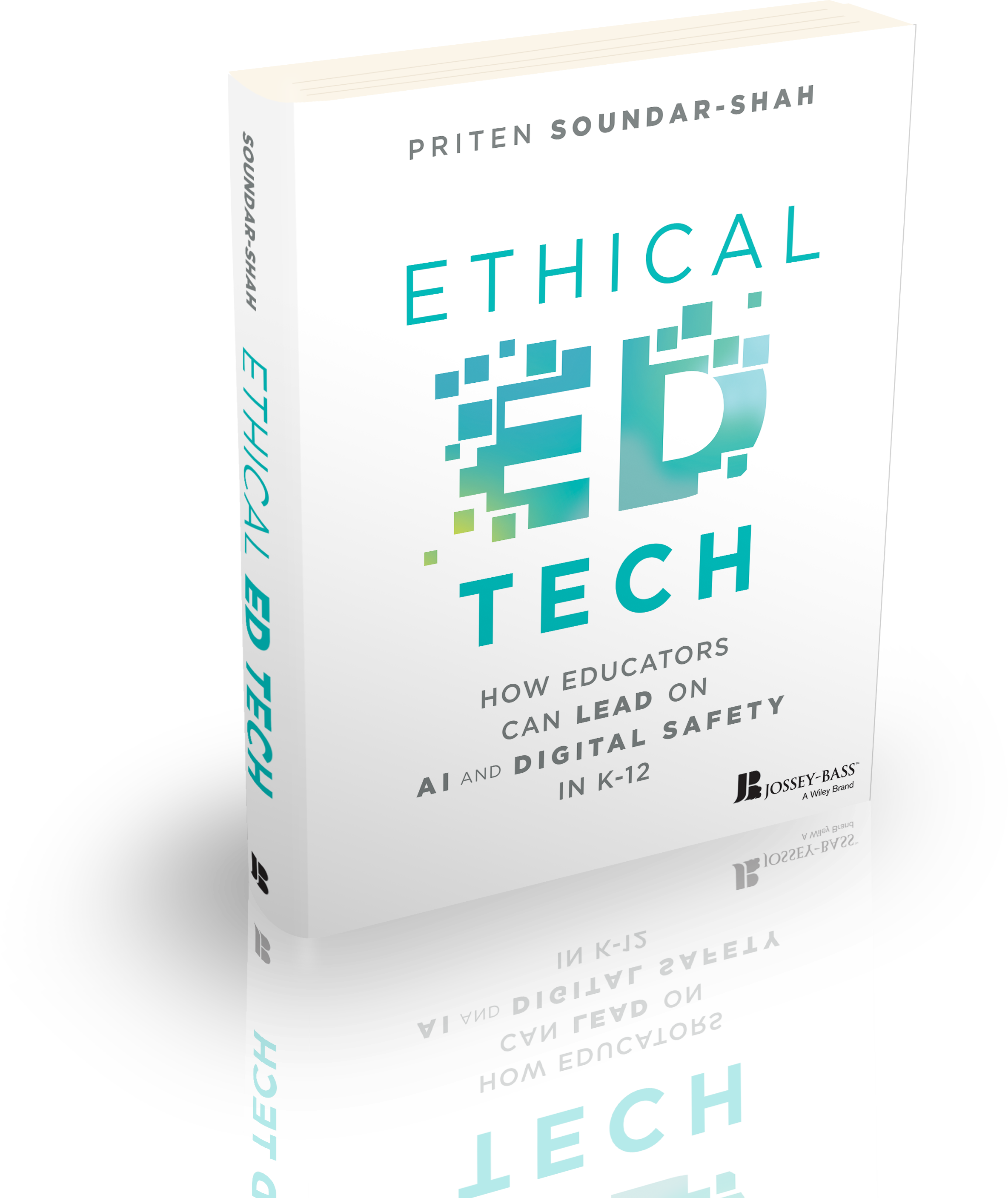
For sure. So my co author, Dr. Mark Miller from Carnegie Mellon and I co authored the book called AI and the Future of Education. And what we're really trying to do is basically give education leaders and policy makers a framework for thinking about AI integration in education. And what we found is like, there's a lot of buzz, there's a lot of hype, but we're not seeing a lot of really clear frameworks for thinking about what should we be doing here?
And so we've come up with a framework that essentially, maps out three different dimensions. One is like, how are we using AI to enhance human agency and capabilities? The second is like how AI is helping us to address equity and reduce biases, and the third is like, what are the risks and the governance issues associated with AI?
And so in that framework, we have, we've identified like, some really key use cases for education, including, cognitive science-backed tutoring, metacognitive coaching, which I mentioned before, and then, intelligent mentorship programs. And then, we also have a whole section on AI literacy.
So, going back to what I just talked about AI agents, the largest use case for AI is, is actually, is actually, literacy around AI itself. We need every single student to understand, like, what is AI? What can it do? What can't it do? What are the ethical considerations around it? Because, I think, this is a future where like, people are very much going to be interacting with AI. And so, I think AI literacy is one of the most important investments we can make as educators.
And you also talked about, equity and personalization at scale. And that's, that's a really, really big task to undertake. And I'm kind of curious, how is your research, and like, development in the space informing, your product?
So yeah, one thing I've noticed is like, people often think of personalization as like, learners get access to tutors, right? So like we're building intelligent tutoring systems, or they get one-on-one time with like a teacher, but one of the key insights from research is that like, we don't all learn the same way. And so, it's not just about like, one-to-one, it's about like, one to one that understands like, the different modalities with which people learn, right?
So, there's like a student who might, learn better through a Socratic dialogue, right? So that might be like, a tutor asking questions. There's another student who might learn better through like, explanations and scaffolding. And so, our product, we're really trying to orchestrate like, the different modalities with which people learn best.
And so that means that, like, a student might have a conversation with an AI agent, they might interact with a visualization, they might see like an example, they might interact with a problem, and they might find a conceptual explanation in a different order or frequency than another student. And that's what we're really trying to do, which is like, orchestrate those different pieces.
And so when you're thinking about scale, you're really thinking about, multiple students learning in multiple ways, with multiple modalities at the same time. Which is incredibly difficult to do with just human instructors.
Right. And I think also, importantly, when we think about equity and access, what I've noticed is, I think the pandemic, the remote learning experience, it really exposed, how technology, how COVID, how the pandemic, shined a light on, how technology was not inclusive, and how there was a digital divide that was much worse than we thought. I think what we saw is that like, folks who had access to technology and the skills to use it had a very different, remote learning experience than folks who didn't.
And so, I think, when we're building these tools, we're really trying to ensure that, these tools work for students across different learning styles, different socioeconomic statuses, and different access to technology. And so, what does that look like? Like, we're testing with students in North Carolina, who like, might not have access to the best internet connections, for example.
And so, we're making sure that the modalities we have are accessible across low bandwidth environments. And then, for example, if a student doesn't have access to like, an iPad or a laptop, they might have access to an audiobook, for example. And so, we're building in those modalities as well. So if a student has to access like, audiobooks that's an option as well.
That's fantastic. Did you read the book?
I was not the narrator, they uh, yeah. I'm like, I think I'm thankful for that, so, I'm gonna,
Hayton, you have more important things to do than to read your own book, which is fantastic. Preetan, thanks so much for showing up folks. The book is AI and the Future of Education. You can get it today at amazon. com. Preetan, thanks so much for joining us today and we'll see you next time. Hey folks, could you do me a favor?
Related conversations

Podcast
Role of AI in the Future of Education
EdInsights
Podcast
The Role of AI in the Future of Education with Priten Shah (EP155)
Rethinking Learning Podcast
Podcast
AI in the Future of Education with Priten Shah
EduMagic New Teacher Podcast
Podcast
The Promise and Dangers of AI in Education
All of the Above