Podcast Appearances
This Week in Canadian EdTech with Priten Shah
MindShareLearning Podcast
December 2023
Related Projects
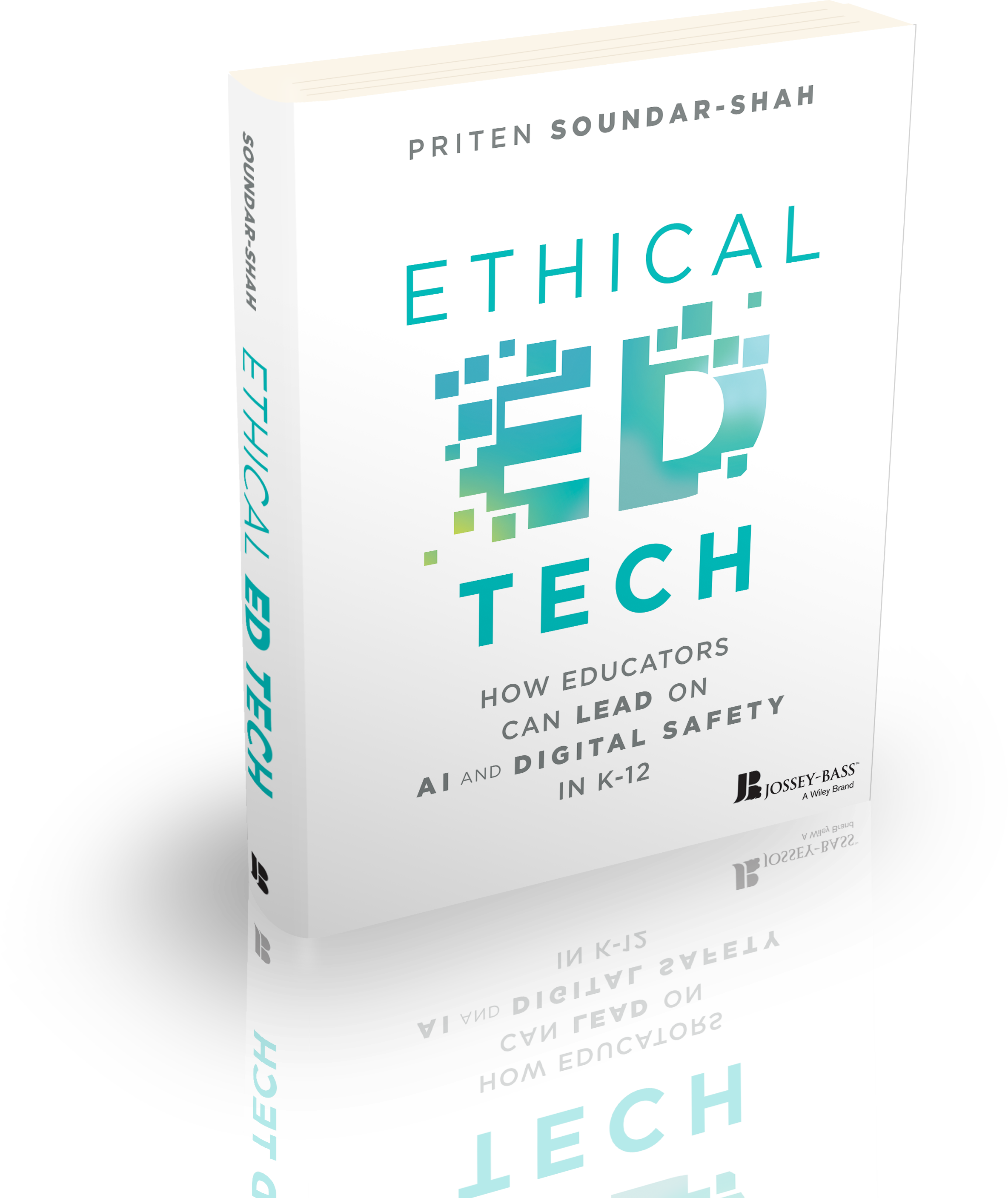
- AI & The Future of Education: Teaching in the Age of Artificial Intelligence
Transcript
this is Robert merachi the M shared learning report Canada's learning and Technology E Magazine and welcome to this week in Canadian ettech very special edition I'm honored to have joined me for a mind shared learning moment priton Shaw who is the author of AI and the future of Education teaching in the age of artificial intelligence he's a Harvard graduate we shared his book recently in one of the Mind share reports and we just happen to connect sometimes you just need to reach out to people and they actually respond back to you uh on LinkedIn thank you for joining me uh this afternoon priton I'm very excited to be here tonight and it's pretty cool to hear that you have family in Canada so we need to get you up here talking about your book and the future of AI it's it's vastly misunderstood in education uh I'm part of c21 Canada and we are writing a report on it um a lot of the school districts have yet to develop policy around it so uh one of our Co-op students or two of our Co-op students from local high school you know are being blocked from accessing chat gbt I know that early on that uh New York City Schools blocked it and when I was at at Tech week in New York recently they actually started an incubator on uh Ai and education so a lot going on talk to me about the inspiration for the book yeah um I think you actually hinted that already and I think um it's largely that there was a lot of fear um when AI came out in the the newest ways of AI came out last fall um and we kind of saw lots of folks starting to be really worried about what that meant for their school assignments what that for what students were doing at home in terms of plagiarizing um and I was sitting here coding away very excited with the technology building some tools that I thought were going to be Innovative and exciting and engaging for students um and so the book was kind of my way to hopefully get folks on board with seeing that um while it has created some problems and those problems are real um there's also lots of great potential for how we can think about education in the future with the with the using AI as a tool and so the book hopefully does a little bit of both of that helps us think about how we can deal with the problems that it's created for us but also see the bigger picture of what where we can be as an educ system fascinating now you just you know we were talking off air in our warmer Chad about a recent Workshop you did and there there is a lot of um hesitation uh people are reticent to change often times we have our early adopters uh much like us and then you have your lagers but you you're able to turn people around once you take a deeper dive yeah I think a deeper dive and a deeper breath sometimes is what's necessary here um and we try to do that with with folks when we meet them um we try to give them an overview of all of the ways that we know that they're what they're worried about um the bias issues the privacy issues thinking about the plagiarism issues how students are using it to cheat but we also talk about how we can do a lot of really cool things meet a lot of the goals that we have as Educators using AI technology um and by the end of the end of our time with them they're usually um very much able to see uh the potential benefits of it and I think that's true that there's you know there will always be some negative and downsides to new technology especially this powerful um but as long as we can try to reorient both our students and our systems to take advantage of the technology I think we can start all taking a deep breath and just focusing on what we like to do which is teach and you and you as we see here uh on your website that I'm sharing um you offer a practical guide and it's really focused at the teacher level talk to me about leadership and how you know leaders need to First understand before it Cascades down you know there's the notion of bottom up top down uh I think there's somewhere in between where you need to sort of educate both at the same time because it's moving so fast I mean who knows you you you said you wrote this book in one month that's that's inspiring to me is I've been struggling to finish my book The Art of networking in the digital age so it requires intense Focus to get things done sometimes yeah no absolutely I think the the need is to so fast right I think that um Everybody kind of needs to get on board very quickly with what the problems are with what the potential is um and we do a little bit of both we do we do a lot of workshops cater towards administrators um we go in and do particular PDS with um department heads with superintendent curriculum and we kind of try to help them have conversations about what kind of policies they need to be thinking about creating at the district level what kind of Poli policies they should help their teachers be thinking about um and what kind of training they'll need to provide their teachers in order to help their teachers really see um the benefits and deal with all the downsides um but a lot most of our work is directly teacher facing we try to do a lot of things where teachers can access us without having to go through their schools um so that if they know that they want to start building some professional development around AI they can come take one of our online courses they can do attend one of our workshops they can read the book um and they can engage with a lot of our online content and tools that we provide as well um but we are long-term goal is to get more administrators on board so they can support their teachers um through that Journey well I'm excited to see that uh you have an audio book coming because I prefer to listen I'm one of those auditory Learners that uh and am visual but auditory seems to work better because I tend to fall asleep and I travel a fair bit so it's easier to listen to a book than than to read it and that's launching in the new year that's right um and I'm also an audiobook person I prefer to listen to an audiobook as I drive or go for a ride and so I'm very excited that Wy has been able to partner up to create an Audi book version of it and it does come out right in the middle of January so we're really excited for that and pre-orders are out for that already so do you feel Harvard really prepared you your career at har education career at har Harvard talk to me about that experience and how it kind of prepared you for what you do today yeah um I love talking about this um I think a lot of folks um are surprised when I tell them that my undergraduate experience was in philosophy um I think a lot of folks expect a computer science background um and I like to really highlight that I think that that's largely What's led to my ability to think about these things um has been the philosophy background I think um a lot of the same logical reasoning skills that you need in order to write a good program or what you need to write a good philosophy paper um they also let you think critically about the kind of society we want the kind of implications these technologies will have um both in our education system and more Broad um and so you know my ability to um think about these things was definitely dramatically impacted by that undergraduate experience that's fantastic now I see that you did some teaching abroad um so you have a very diverse background and one of the things that um I talk about is how leaders the the the most impressive leaders in education tend to have diverse experiences outside of Education in fact one of the award-winning superintendence I met over the weekend at a c CEO Gathering of etex uh in Florida uh traveled toured with the bees for five years and was a tutor to the bees kids and award-winning superintendent and what's what's interesting is that uh you know they were immersed with a band that had five number one singles at one time yeah so when you're immersed with excellence and surrounded by Excellence Excellence be gets Excellence about life experiences you know we settle for nothing less than excellent in what we do here at the Mind share workspace with a focus on work and learning and hence connecting with someone like yourself is a natural kind of thing that we tend to do you know you're amongst Sir Ken Robinson uh Dr Seymour paper and Dr Michael full and Andy Hargraves uh who was a sorry he was a BC uh Professor not not Harvard but recently and and it's incredible when you uh hear those stories about the journey it's not always a direct path yeah um definitely has not been a direct path it's taken me all source of places I've um I've taught in South Korea um for a little bit um I've done some teaching locally here I've done debate coaching um and then I've done built lots of different tools um and so whether that be um we did like some test prep stuff as a when I was a high school student um to lots of stuff during the covid-19 pandemic um to reasoning tools and Mastery learning standards based tools for or nonprofit based out of Harvard um to the latest stuff involving AI there something been um thinking about the education system from all different angles how how connected are you to Harvard today and have they invited you back to speak um we're working with them and trying to see if there's some overlap potential with The Graduate School of Education um but main our main connection right now is that not nonprofit based out of there um they provide reasoning education for pay tool and or higher ed and in fact even for graduate schools talk to me about you're not for profit yeah um which is partnered um with the for-profit as well so United for social change is our Civics education nonprofit um and everybody on the pedagogy team does a little bit of work on Ury um and that's where we try to build an interdisciplinary lens for civics education so the idea is um that you know in the west we Champion our liberal arts education as a way to develop into a flourishing individual in our Democratic societies um but there's a huge access to a barrier access there you have to attend um you know expensive for your universities most of the time to get a robust liberal arts education um and our goal is to make that more accessible and bring that lower to the K to 12 level um so that folks kind of get that well-rounded philosophy sociology Humanities background along with their stem background um so they can really think about the world from all different perspectives I'm gonna throw a name thank you for that I'm going to throw a name oute at you we had once had a keynote from a high school student in north of Toronto who ended up at Harvard I I I knew she was destined for great things Maya Burnham Parker and uh Road Scholar now and uh is a New York City and if you're not familiar with her she created some of her own patents and was just a remarkable individual that I'm happy to connect you with her yeah I think I'd love to connect yeah alumni and uh but uh we're we're in good company here um so talk to me what what's next you know everyone's grappling with this AI generative AI sees great potential um and you know promise uh for uh creating efficiencies and taking away some of the administrative things um that teachers are always grappling with in their day and and not able to spend enough time with students talk to me about you know what you see maybe a tip or two that teachers could leverage uh in you know besides getting your book and and digging deeper but a couple of tips that you see in terms of turning teachers around and their thinking of why they should embrace it yeah um that's a great question I think um there's two things that come to mind immediately the first is um I think a lot of folks when they first heard about the Technologies in the last year they went and played with them a little bit didn't exactly see any use for it because they put in a prompt they got output that wasn't exactly what they would make and then they walked away and have it returned for quite a bit and so my plea to all those folks is to go try it again um and maybe even consider tring a free trial trying to paid plans um because a lot of these models have been updated and they been in the last six months to be very very robust um and the potential to use them in education is even greater they're capable of generating images they're capable of analyzing images um their reasoning skills writing skills are substantially better um and so whatever task you tried already with it and it ended up not really going the way you wanted um I would give it another shot um and then if you still don't feel like it did what you wanted um tell it that and I think that's the other part where we feel like we a lot lots of folks um leave where they don't get the exact right thing um we like to tell them tell tell the system what it did wrong because it's built to have a conversation with you um and so that is one of the reasons why it became so popular was because it's conversational um and so I highly encourage teachers to make an account on you know open AI chat TPT where Google's barred um and go and tell it to make something for you ask to make a lesson plan or worksheet um and then if it doesn't do it exactly right tell it why you don't think it was right and um we think that that will get folks on board the second is um I know folks are struggling with figuring out how to deal with the plagiarism problem they see students cheating and they're worried about what kind of homework assignments and out of classroom assignments they can send home students home with um and we also are you know we like to have conversations about what that means for what kind of assignments they assign but that's another place where you can start talking to AI um and so maybe you go to chat GPT and say hey lots of my students are cheating on this essay assignment that I normally assign um what can I do differently and see what it says um you know it might help you actually think about ways to get around the problem you're facing so the prompting piece is really critical in understanding yeah uh you know the best responses are based on on how you prompt uh the AI right exactly no I think that that's right and so I think that the more specific folks can be um the more likely that the output is exactly what they want um but for a lot of like folks who are using it for the first time I think they get very concerned with coming up with that exact right prompt for the beginning um and we tell them to just relax um put in put in exactly what comes to your mind what you would maybe send in a text message or slack message um to a fellow teacher um and then just have a follow-up conversation because I think that that takes off some of the burden um and fear about am I am I crafting the exact right first thing to say um and I think that sometimes um stifles folks from you know actually taking advantage of the tools and so while the prompt is really important um the more specific you can be the better you will get a better output um maybe for the first couple of times you can just go in and just have a normal conversation and see where it takes you I thank you for that I see the the power and potential in terms of the lesson planning because teacher spent hours on lesson planning to be able to just in you know I've created a couple on the Fly and it's seconds you know you just whether it's you know a lesson on the solar system and it you know it gives you the rubric it gives you the assessment you know it's incredible uh if you ask it the right questions and what about the ones that create a dynamic uh lesson with images as well what is that in chat gbp4 or another AI like what maybe you can recommend of course chat gb4 will generate images and they'll be custom images so you can tell it to make a comic book version of George Washington crossing the Delaware River um or you know a scene from ancient Athens um and it can kind of create your Custom Image uh based on that Google's B will actually pull images from the internet so if you just want something where you know my go-to example is um create um a like a lesson plan with um all nine planets a picture of them and a fun fact about them um and it will generate the fun facts and then put pull images from the internet that are real as well for all nine of the planets amazing so uh talk to me about ethics and what teachers need to think about when it comes to the you know dealing with some of the legal aspects of this because if you put your essay into chat gbt who owns the essay right um so the terms of service for most of these um companies are pretty clear that everything that you put in is your data um everything that's generated is in fact also owned by you so they they transfer all copy rights for things that are generated um to the individual user um but there's really good ethical reasons to think about why we might not want to put um particular things into these systems and so um we might not want to share a bunch of student data for complying with state and federal um student regul privacy regulations um we might also want to be careful about making sure we tell folks that we're using AI um in order to Foster that culture with our students as well and so if you're generating a lesson plan using AI tell your students that right there's no you want them to tell you when they're using AI um and start building that culture of being open about when we're using these tools as a supplement um rather than um trying to hide away from it because I think there's nothing you know there's there's great reasons to use it um it'll free up your time to better serve your students um but the stud as also they'll help the students also think about these things as tools and not as cheating if you can frame it to to them as absolutely you know students today want to be creators storytellers give them agency let them refine their their craft and I for me I I I found that it's enhanced my my writing skills I'm very much more mindful of being more dynamic in my writing and precise and and I attribute that to you know generative AI does that make sense no it makes complete sense and I I love using these tools as like a thinking buddy um and so oftentimes the hardest part for me is like starting writing something um and so what I have it do is just like I'll say oh I want to work on an offed about this particular topic um can you outline it with questions and so because I find myself it's much easier for me to answer particular questions um and so then I have an outline for whatever I need to write but in question format and so I'm still I'm still the one going in there answering these questions um but it's done a good job of giving me some initial fer to get my brain thinking about the topic and the kind of ways it needs to produce the first draft now uh here's a really tough question for you did you happen to leverage gener of AI in your book writing process yes of course um and the preface explains exactly how it was used um and the technology was unfortunately not even as robust as it is now when I was writing the book um but it was still a great thought partner in terms of figuring out um creative new examples because I find myself using the same examples frequently and so instead of talking about to Kill a Mocking Bird every single time um it kind of was like oh you know gave me some other ways I could think about um some of the same things I was thinking about um editing the book grammarly has an amazing AI um spelling and grammar check syntax check exactly so um that I'm sure made my copy editor job much easier um and so it was a great you amazing well that's a great example no brilliant uh priton I know uh you have a busy schedule uh you're an impressive young man I'm so pleased we connected I look forward to continuing our collaboration and getting you up to Canada perhaps speaking at our Canadian ech Summit next year um I can only imagine what's in store for the coming year I've never been more excited about the future of Education closing thoughts no um I'm also excited um and I think that these human conversations are really important in the age of AI and so I'm glad we got to start having one today and hopefully we can continue it well I look forward to meeting you in person one day that was uh Shaw the author of AI and the future of Education my name is Robert Maran the Mind share learning report be sure to check out triple W mind share learning to get your latest issue and then until next time stay healthy stay safe and keep the learning curve steeve
Related conversations
Podcast
Role of AI in the Future of Education
EdInsights
Podcast
The Role of AI in the Future of Education with Priten Shah (EP155)
Rethinking Learning Podcast
Podcast
AI in the Future of Education with Priten Shah
EduMagic New Teacher Podcast
Podcast
The Promise and Dangers of AI in Education
All of the Above