Podcast Appearances
Utilizing AI in Music Education
The Elementary Music Teacher Podcast
March 4, 2024
Related Projects
- AI & The Future of Education: Teaching in the Age of Artificial Intelligence
Transcript
This transcript was generated automatically. Its accuracy may vary.
Intro
Elementary music teacher friend you?
Speaker 2
Love what you do.
Speaker 1
But you might feel unappreciated and in fact unseen.
Some days you may even feel like you're on a music teacher island and just want to connect with other music teachers who can relate to both your struggles and wins when it comes to teaching elementary music.
I get you and understand completely the feelings you're having.
That's why each and every week, the Elementary Music Teacher Podcast will provide you with solo and guest episodes that will help you realize you're not alone in your music teaching journey.
Throughout each episode, my goal is for you to be able to walk away with actionable steps and ideas to help you feel like you're ready to take on the new week with whatever challenges may be thrown your way.
Hi, I'm your host Jessica Peresta, and I'm so glad you're here.
Whether you're at home, in your car, in the shower, or wherever else you're listening, grab your cup of coffee or whatever other beverages nearby and listen in to the Elementary Music Teacher Podcast.
Speaker 3
I'm William Andreessen, host of Speaking with Students, a part of the Education Podcast Network. Just like the show you're listening to now, shows in the network are individually owned and opinions expressed may not reflect others. Find other interesting education podcasts at Edu Podcast Network.com.
Speaker 2
Welcome back everybody.
AI in music education I am joined today by Preet and Shaw. He is going to discuss with me utilizing AI and music education. I was telling him before we started recording that this is something I'm really excited to also learn more about, because we know AI is a really big deal right now, and so I'm also excited to chat about how to use it in the music education setting and with your students as well.
So with all that said, welcome to the podcast. I'd love for you to just introduce yourself.
Speaker 4
Thank you for having me. I'm excited to talk about it from a very particular angle. I think music is a really good way to talk about some of the human aspects of it. But to start off, I'm an education and technology entrepreneur. So I build various different solutions for education that use technology to kind of solve some of our deepest problems.
The last few years we've been focusing on AI as that problem and solution. I think that is the right way to think about it. And part of that includes, like professional development for teachers, Think about our own tools for students and teachers, and that we do a lot of thought leadership on it, including a book.
Speaker 2
Awesome. Well, yay. I'm so excited for you to talk more about that towards the end. We'll definitely shoot those links in the bio as well in the show notes. I mean, OK, so well, for those listening.
What is AI? And that's OK if you haven't heard of AI, but can you just start off by explaining what AI is? Yeah.
Speaker 4
That's a great place to start. So when we think about artificial intelligence, we want to think about the ability for machines to do human like cognitive activities and that's the really like that's the the umbrella way to understand all the different types of AI. But we've also seen like this has various iterations and so AI has already been a thing like your Siri or Alexis.
Those are powered by AI technologies. The Netflix algorithm will tells you what show to watch next is powered by AI, but those kinds don't really freak you out and they're not the ones that we're talking about in education and maybe in some aspects, but not at the levels that we've been talking about the last few years. The kind of AI that we're probably going to talk about today and folks learn about more about is called generative AI.
And that's the one that we really want to focus in on, thinking about the potential and what kind of coverages do we need to have with our students. Which is basically that like the technology is able to actually generate new content and not just classify or do bare minimum tasks, but existing content. And so kind of learns patterns and things that it knows and it tries to replicate those patterns.
But we'll talk a bit more about that needs for music versus words and all those kinds of things too.
Speaker 2
Perfect. Yeah, I told you we decided to just record and talk about this actually on the episode. But Doctor Patrick Cooper, if you're listening, he is a music Ed professor and was doing a survey. I want to say it was for one of his classes or something like that. But basically, like, can you tell if this Lesson plan was created through AI or through a human?
And I I was like, oh, no problem. I'll totally be able to tell. I've written a million of these and I was like, OK, maybe not. So I'm fascinated by it because I think sometimes AI, maybe you can definitely talk about this, But maybe because it's not been a, well, it has been around a while, but not in the sense of, like you said, using it in education that a lot of teachers are just like, Oh my gosh, it's replacing me.
Or like that, like if it's writing my lesson plans and am I doing an effective job. So I don't know what you're just any of your thoughts around that with teachers listening?
Speaker 4
Yeah, we hear this concert a lot. And that's actually why folks kind of hesitate to kind of think about how they might productively use it. And that's one where like I think the media has done a really bad job of kind of making this seem like a really scary monster that's going to take and it will take away some jobs. So the reality is that that is that is true of like, you know, there are, there are jobs that will like change because of AI.
We'll have new jobs, we'll lose some past jobs. But one thing I'm really confident of, and maybe I think other folks in education are also this confident, is that teachers aren't going anywhere, that we really need the human element in education. If we think about just like how much of a difference Zoom education made, I'm hoping that that kind of calms folks nerves.
Like we couldn't even fully like teach students while we were digitally doing it because it wasn't the same. Students were having the same social emotional development. They weren't feeling as motivated. And that's the human teacher across like a video camera. So now imagine there's not even a human on the other side of their screens.
We're not replacing that human aspect anytime soon. So what we're really want to think about with AI is a how can we embrace it to make our better educators? And so making lesson plans is a great way to think about that. So not having to make lesson plans, is it being replaced. That's actually a pretty good thing, right?
So we should all be thinking about, like, if I had to make do a little bit less grunt work before I show up for my class, what else can I do to better prepare myself to, you know, be better for my students, like meet their needs better. But it's still you. And like the human will be necessary to be in the classroom, like helping the students navigate it.
Like, you know, like the a teacher crouching next to a student on that next to a teacher, like a student on a desk. There's a very different experience for the student versus like an AI tap bot saying, oh, like help me, how can I help you? Like it's just it's a very different experience. And so I'm hoping that folks can kind of like, take some of the media headlines, take a deep breath, and see that like, we're fundamentally humans will want to learn from other humans.
Speaker 2
Here's another good example of that. I have a podcast editor and she also does my blog post for me that goes along with the episodes well. Anyways she from younger generation, I'll just be honest like you know I'm I'm older she was like hey I'm going to write your blog post but do you care if I use AI and I I because it's newer to me too.
At first was like, I mean I go, how about yes, but then let me see it so I can make sure it's still my voice. And when I saw it she would plug in like the bullet points and the headers I had and.
Speaker 1
Things.
Speaker 2
I would just have to change out instead of like we to to I or something simple like that. But it was amazing to me how, I don't know. Like it looked like I wrote it. It was kind of scary in a way. In a good way. But yeah, So all that to say, I I know what those feelings are like like, oh, I don't know, but I'm, I'm used to doing it.
But it's a good.
Speaker 4
Thing, right. And think about like there there is a level of like thinking that went into producing those initial bullet points and only you could have done, right. You were on the episode like you kind of talked to your guests and only you were able to, like, use that insight to come up with those bullet points and not having to put it into prose. Like, is that really right?
Like, is that really the place where your particular impact as a human was taking place? Probably not. Right Like that your impact was taking place in the conversation you had in the audience. You already have relationships you build with people and that will still be yours. And so if you can get a little bit of like the work that isn't uniquely yours done, it gives you more time to do the things that are unique to you.
Speaker 2
Perfect. Yeah, that's awesome. That's a great point. So we've talked about lesson plans, but how else have you seen teachers already use AI in their teacher life?
How teachers have already used AI in their teaching Yeah, there's such a wide variety here. And so I think for folks who are probably still like in the like, let me just stabble with this technology or see where it can even do lesson plans, worksheets, those kinds of like the paper or goods I would think say are probably the easiest place to start because you don't have to put it in front of students.
You have kind of a chance, like check it over review it before it makes it public that I think the way you used to review the blog post before it came out about. Like you might be a little bit more skeptical about having like AI do a live stream of your podcast episode as you write. Like you might. OK, like that's not, that's not something I might want to do. But you know something you can check over and put add in your own feedback in your own corrections is definitely a good place to start.
So lesson plans, worksheets, even drafting emails, drafting permission slips, dropping even like different differentiated texts for folks. And so if you're like assigning it a new reading and then wanting it at different reading levels, even crafting reading to assign all those kinds of things the technology is really good at doing.
There's the entire suite of things you can kind of like think through in different parts of your job. And so AI can also like, you know, build spreadsheets for you. So if you're keeping track of grades or attendance or something like that in a spreadsheet, it can kind of do that for you. Put the formulas in which, you know, I hate it. Always keeping track of like all the different formula syntax.
And so now that you can like have AI free to like write the formula for Excel spreadsheet is pretty cool. But you kind of want to think about what are the tasks you do that are repetitive on a regular basis that don't really, like make you really motivated to teach that aren't student facing right away. And those are places to start thinking about how you might want to incorporate AI.
Speaker 2
Yeah, so you don't have to figure out how to use it in every area right away. Like you said, pick the ones that I love that you said that, like, what's the grunt work and the things that are repetitive. It's like kind of having a virtual assistant in a way. I don't know. You know, it's like, yeah.
Speaker 4
No system is great to think about it.
Speaker 2
Yeah.
Speaker 1
Yeah, yeah. And it.
Speaker 4
Actually, like, even if you just go to, you know, the ChatGPT and say, hey, I'm a music teacher teaching 5th grade students and we're currently like like learning about music history, What are some ways you can help me? Like, you might even don't even do that brainstorming with you to think through. What are the potential ways even that AI might be able to help you?
So even for that stage of it, you can kind of use the technologies as a brainstorming buddy, but definitely want to think about as a buddy that's a good and assistant a buddy. That's a good way to think about it.
Speaker 2
Yeah, that's awesome. Yeah, that's a good way to look at it too. Okay. So you had mentioned to me about your opinion on the importance from a humanity, skills and growth perspective.
Why Should Students Learn? And so let's kind of have a conversation, but maybe some concerns you have about justifying to students why they should learn things like languages, poetry, and music with the increase of AI technology kind of a.
Speaker 4
Yeah, there's so much here we can talk about. And I think just like the way to frame the problem is just like we always have to answer to our students, like, why should I learn this? And I think that that's getting harder and harder to answer really quickly because the technologies are able to do things that we might traditionally teach our students to do.
And so Master had a lot of practice answering this question. When it comes to like, why do I still need to learn basic arithmetic of a calculator can do this right. They have answers for why it's important for future skill development. All right. Like they're they're they're ready to go with that. I think new subject areas are having to answer that question because these are, there are new things that these technologies can do.
And so there are AI algorithms, including ones put up by Google that will create music. And so why? Why still learn to, like, play an instrument? Why still learn to sing? And those are the kind of questions that we're seeing pop up from students in All in all these areas of like, creative endeavors, especially that AI technologies are now able to do.
I think that this is 1 where there's a great time to pause, right? I think it's a great time to like sit down with students and kind of like explore what role, like music plays in human interactions. Like what role it plays for the person playing the music, creating the music, what role it plays for the the person who receives the music, how you receive music differently in different contexts.
And so a concert versus like on CD player versus on a radio versus like your friend playing an instrument, right. All those things are very different in emotional experience for you as the listener or you as the player in in all those contacts. And so these are great most things about like, OK, even if AI can do things, are there reasons why we as humans might still want to do these things?
And I think the answer will be yes.
Speaker 2
Yeah, for sure. I mean, I'm thinking back to my band experience and the collaboration and the group work aspect and whatever you're involved in. In school, that was like my place to hang out. Even outside of being. It was just like you find your people and that's just where you kind of hang out.
And so I love that. Bringing it back to the humanity aspect of why, though, what is the importance of it? Yes, playing the instrument itself is important, but there's so many other amazing things surrounding that that I think kids of this generation maybe that they don't realize, but maybe they just need some reminders about, you know?
Speaker 4
Right. No, I think some reminders are great to think about it. And there's even, like, really good social, emotional development reasons for the students themselves to think about like, why that's a good outlet for them when they're stressed out later in life or why when they're anxious. Why it might be nice to be able to sit at a piano and kind of play a song and kind of zone everything out while, like, the world is going on around you.
So I think having those conversations about like why it's still important to these things, even if like some technology can do the exact same thing, I think those are important conversations start having.
AI Stifling Creativity Now, yeah.
Speaker 2
I feel like you touched a little bit on this, but do you feel like AI has stifled creativity for both students and teachers? Or do you see this maybe being a problem in the future? Or maybe not.
Speaker 4
Yeah, I don't think we've seen like too much stifling right now. I think most folks are still like brand new to the technology. I think they're exploring it. They kind of want to see how it can like allow them to be more creative. And that's what we're hoping it continues to be used for. So maybe like the Lesson plan generator kind of gets into like a 90% done Lesson plan and you can kind of use your energy of like as some creative twists in ways that you might not have if you had to spend a lot of time doing the basic components of it.
I am worried about what this means for the future. I think This is why this conversation is even important. I think sorry to have conversations about like why human involved in these things. It's important why we should continue to be motivated to be creative and kind of push the boundaries of what it means to be human and what our unique contributions are.
I think those are, those are really important. And so if you're generating a Lesson plan from ChatGPT or some other AI system and then you're not really getting the chance to sit down and review it and think about the next step, that's that's when I start to see that these technologies might actually have a detrimental impact, right?
That's that's where we might be removing some of the human elements of it. But you do have context on your students, You have context on the area you work in. All those kinds of things are really important. And so taking that step to make sure that like you're still using your creative juices at the end of the day, it's appealing to kind of like start, you know, being like, OK, this is already taken care of for Read by the psychology, but I'm hoping the posting them to see that there's still some role for them to play that's important.
Speaker 2
This ties directly into the next question. We've already touched on how teachers can use AI, but for students with we've talked about it can stifle creativity.
How AI can help students with creativity But what are ways AI can help them with creativity as well?
Speaker 4
Yeah. So I think that there's in music classrooms in particular. I think this is interesting because this is 1 area where the most popular AI tools are like sound base. But there are really good sound based music based, in fact AI systems out there. And so having students that play around with what kinds of music can they generate with these systems like what kinds of words do they have to put in in order to get similar things.
Even do it an exploration of like musical theory and think about like oh if this song that I really like was like written by Beethoven or like in his way, what would like the classical musical component of this song sound like? Those are really good ways to do this chart, like thinking about how they might engage with the content of your class in ways that actually like, is appealing to them.
And this is a good use of the antipolitic classrooms differentiate because they kind of do the, like heavy lifting of, like, connecting things that a student is interested in, in a way that an individual teacher just can't. Like, you can't walk around and like tell a student like how their favorite song applies to a music theory you're teaching.
But yeah, I could do that. And so that's a that's a good use of the technology have have students ask questions about like a particular musical concept of teaching and how it applies to their favorite singer, their favorite music as a way to kind of like get some practice in. Those are, those are definitely the great starting places. I think as the music technology gets more robust, we'll see more and more uses of like students being able to maybe like they play one instrument in the AI plays a different instrument to get a soundtrack, right.
Like those kinds of things will be exciting, I think, for students to start thinking about and playing around with. Like if they're singing and the instrumentals get automatically and created by an AI system like that might be pretty cool. And so those are the kinds of things I'm hoping and start happening in our classroom sometime soon.
Speaker 2
You used a word that obviously I can tell you're in the education world, differentiate. And that is a huge word. In schools, you were told to differentiate with your students. And you see, let's say, I don't know, on average 25 kids in your classroom. And I know sometimes with elementary music, now they're doing centers as well.
Like, you know, everybody's in a small group and you're doing different things. And I know that is sometimes exhausting, walking to each and every group, trying to make sure everybody's on task and making sure you're answering all the questions. And even if you already have it typed out or whatever, they're still asking questions because of course they are.
But that was a great point of you can't be everywhere. And it's not like this, this program or technology's replacing you. It's not, it's not you, but it's going to answer questions that you're not able to answer, like you said. So I think just, I don't know, all these ideas starts rolling in my head When you started saying just the word differentiate, because, I mean, even thinking about the different levels of learners you have in your room, some are going to need more support.
And sometimes we know that, let's say you have three kids and they're on an IEP and you're doing the best you can and there's no aid in there. Sometimes that that is such a helpful way as well, like looking at it that way. So, yeah, good points.
Speaker 4
Yeah. And even if you think about like the next couple of months and maybe like the next couple of years of the technology, I think we'll start to see even cooler ways to differentiate for our students. And so one thing I'm really excited about is starting to see like some VRA. And I know this again, like folks start to like freak out when you start mentioning even more acronyms.
But like virtual reality or modified reality would be really interesting. Like soon as I have goggles on and they're playing the piano and like, it's like keys light up in different colors for them to, like, know where to place their fingers, those kinds of things will start to see.
And again, like that, that kind of individual, like if you have an entire band room and everybody's wearing these goggles and everybody's getting personalized feedback for exactly their what notes they're playing in their finger placement, those are really useful. And like if one for students is used. But also you can't do that. Like there's just no way for a human teacher to go around and check every single student's finger placement at the exact same time.
But the day technologist can start helping do that. And then you can kind of play the role of like helping them understand like general music theory behind it. You can still go ahead and like you see the basic concept in like the AIT culture, helping the students practice. But there there is a role with this collaborative role between like teachers and the technologies.
And I'm hoping we can start to see some of those really cool uses where it's like really hyper focused feedback for individual students.
Speaker 2
I love it. Yeah. I I I have a good example of this as well. I created a strategic plan for a middle school. When I was going through grad school I got my masters in Ed tech in and so anyways for their social studies department and one thing they were wanting to implement more technology.
But instead of just saying that, I was like, but how what what? You know, what do you want it to look like over the next five years. And that's what they mentioned was VR. And at first I was like, what does that look like? And then I was like, how cool is that? Because I'm just going to be honest. Social studies was never my thing.
I think because I didn't have teachers that made it real. It was just kind of, I don't know, a high school coach who just sat at the desk. But now I used to feel like teachers are doing much better. But anyways, so they had bought some VR equipment and I think the teachers didn't really know what to do with it.
And so it was really neat helping them with some lesson plans of like, let them enter into these things they're reading about online and it becomes like a real world experience. And do you see these kids all of a sudden who maybe weren't interested? Like, wow, I'm really curious about this, whatever it is now.
So it's it's neat. It really is. I'm excited about that too.
Speaker 4
Yeah, I think the VR world is is super fast. And again, like when we think about like the student engagement problem that we've been facing, especially post COVID, I think all of these things are like really good anecdotes to its. And so like in some ways while we might have like some struggle in the short term for hearing out how to talk to us and things about this and how we ourselves might want to learn more about it.
I think these things, if we like embrace them the right way, can actually like, solve this problem of like getting students to kind of get excited about what you want to do, what we're teaching.
Speaker 2
We've covered so much today, but is there anything else you want to discuss when it comes to utilizing AI in the music room?
AI in the Music Room Yeah. The only other thing I would say is that I think an important conversation to have with our students is also about like the IP that goes behind AI algorithms. So while all the it's really exciting to see how it's spilled and how it's be used. I think just starting to have some conversations with the students with the ethics of AI is really important.
And so thinking about OK, when these AI algorithms are trained on like thousands of hours of real musicians play music without any compensation, like those kinds of questions I do think is important to just like start having with our students because I'm hoping that we start to see at least some sort of like oversight some sort of ethical changes and compensation models on the training.
But I think it, I think those are conversations that we actually, this will be the ones to create more AI later. So let's let's start having those conversations now so they can start thinking about what implications do these technologies have on the environment. What implications do they have on like musicians and creativity. Why are the Hollywood writers striking right.
Like those kinds of questions going to have to start helping students understand what the ethical implications are as well.
Speaker 2
That'd be a great conversation to tie into. And if students are learning about copyright law or things like that as well. Because yeah, for sure, I can see that I never thought about that. But being a big issue where you're just, you know, stroll scrolling along and you see this song that you wrote playing and nobody asks your permission and you're like, wait a minute, hold on, that's my song.
So yeah, I can see that kind of great.
Speaker 4
Thing or like it's a new song because the anti technology is trained on your voice, like your background, your lyrics and like there's a new Taylor Swift song that's not written by Taylor Swift, right. Like that. Those kinds of things are really important conversations for having with our students because it's all doable now, right?
Like that's that's technology that's exists right this second. Maybe it's not the most popular technology yet, but they're like anybody with a computer and like a couple of hours of Google and can make that happen. And so they're starting to have those conversations. Now is really important.
Speaker 2
So you mentioned your book and I would love for you to mention that, but also where everybody can connect with you as well after this airs.
Speaker 4
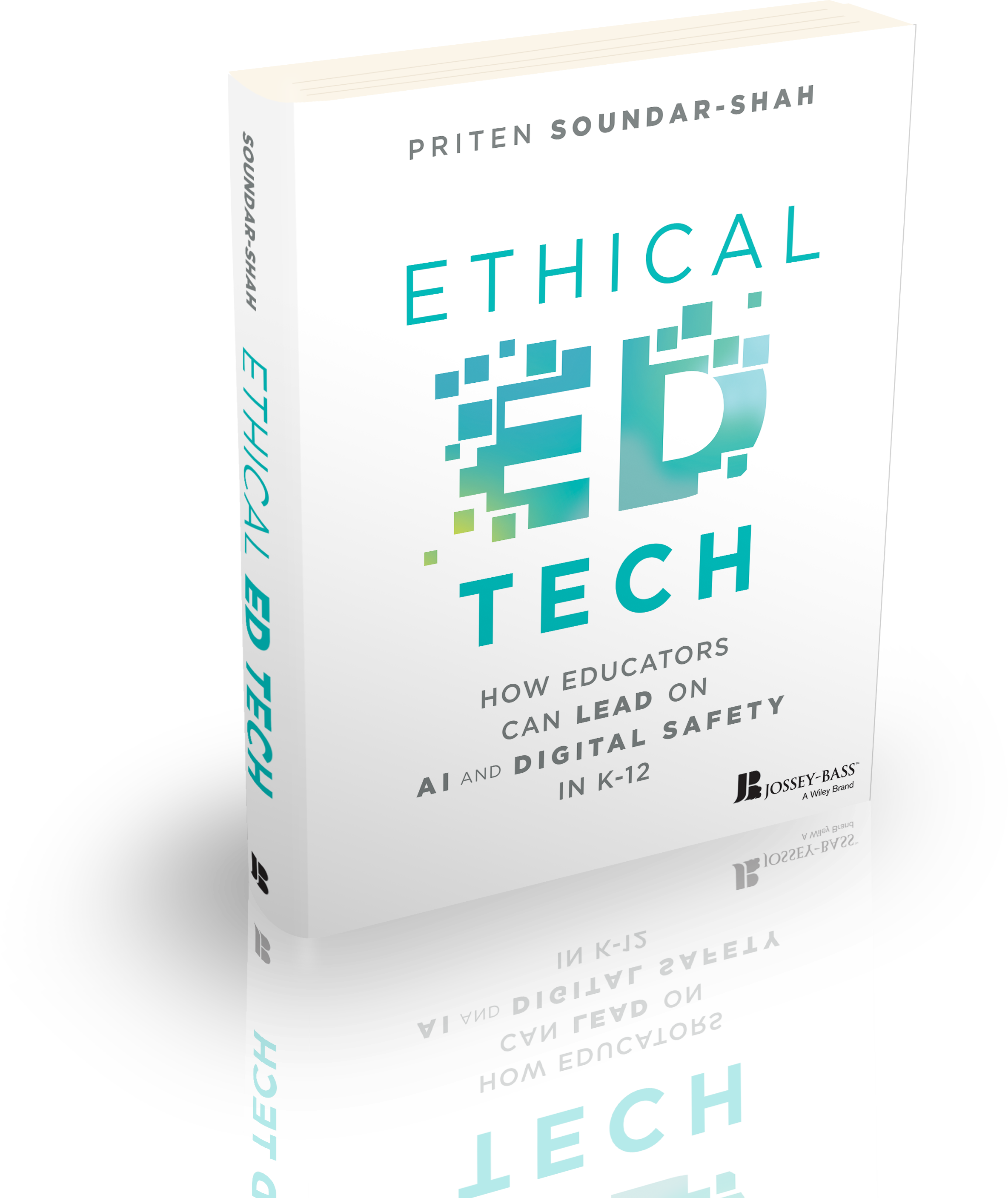
Yeah, awesome. So the book is AI in the future of education, and it kind of takes this middle line stance of like, we need to be cautious and be careful about how we implement AI and think about AI, but that it can also be really helpful. And so there's lots of suggestions for very, like, specific suggestions for how you might want to use it, what big questions we kind of need to answer in order to think about education as a whole in the next few years.
And that's found everywhere where books are sold. It's available mobile in audiobook format, digital format, and physical copy. And then folks should definitely follow our Instagram. We are constantly posting like free prompts and free news updates, how contextualizing everything to AI education. And that's at Pedagogy Cloud.
Speaker 2
OK, awesome. Well, thank you so much. This has been an awesome conversation. I've enjoyed it so much.
Speaker 4
Yeah, me too.
Speaker 1
Well, hey there. Thank you so much for listening in to the Elementary Music Teacher Podcast. There is an exclusive Facebook group just for listeners of this podcast and any elementary music teacher. Call the Elementary Music Teacher Community Facebook group. Come on over and.
Speaker 2
Join us there.
Speaker 1
Where we have conversations around the podcast episodes and encourage each other each and every week. And also head to my website thedomesticmusician.com. I have some free resources there that you can download to help you gain traction in your classroom today, as well as the blog and the membership site and all kinds of other goodies to help you keep connecting with you and encouraging you and spurring you on in your journey of teaching elementary music. Hang in there, have an amazing week and I will see you soon.
Related conversations
Podcast
Role of AI in the Future of Education
EdInsights
Podcast
The Role of AI in the Future of Education with Priten Shah (EP155)
Rethinking Learning Podcast
Podcast
AI in the Future of Education with Priten Shah
EduMagic New Teacher Podcast
Podcast
The Promise and Dangers of AI in Education
All of the Above